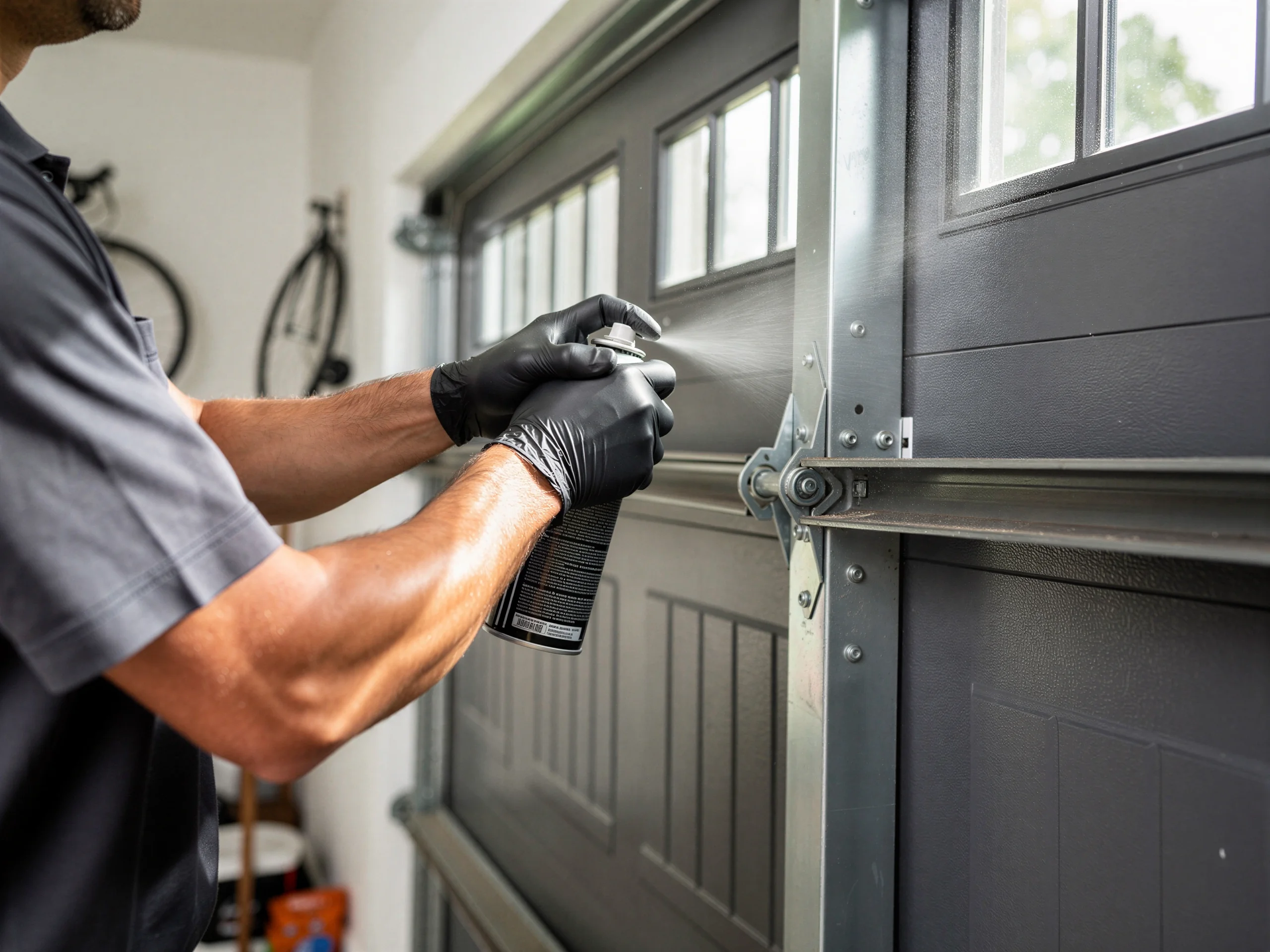
Doing It Yourself
Itasca is a small town by household count - about 3,827 of them, which is nothing like the sprawl some of the towns on our route cover.
Individual lot history
A town this size means fewer big production-builder subdivisions and more individual lots where the garage door was put in once, in the 1970s, and never touched again until it broke. That matters for what you can fix yourself. If a remote stopped working, replace the battery first - that's a five-minute job and it solves more calls than people expect.
Manual lock lever
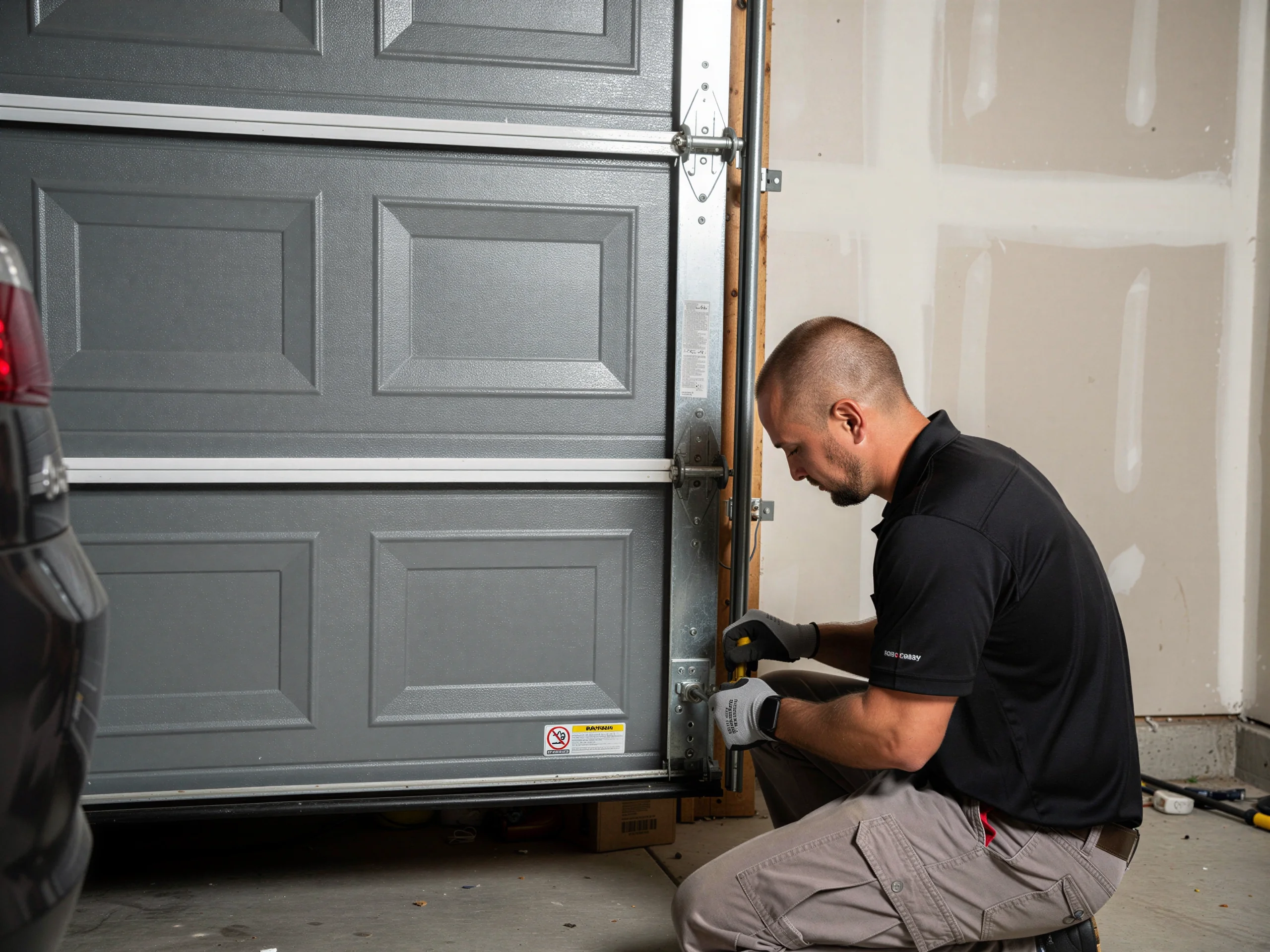
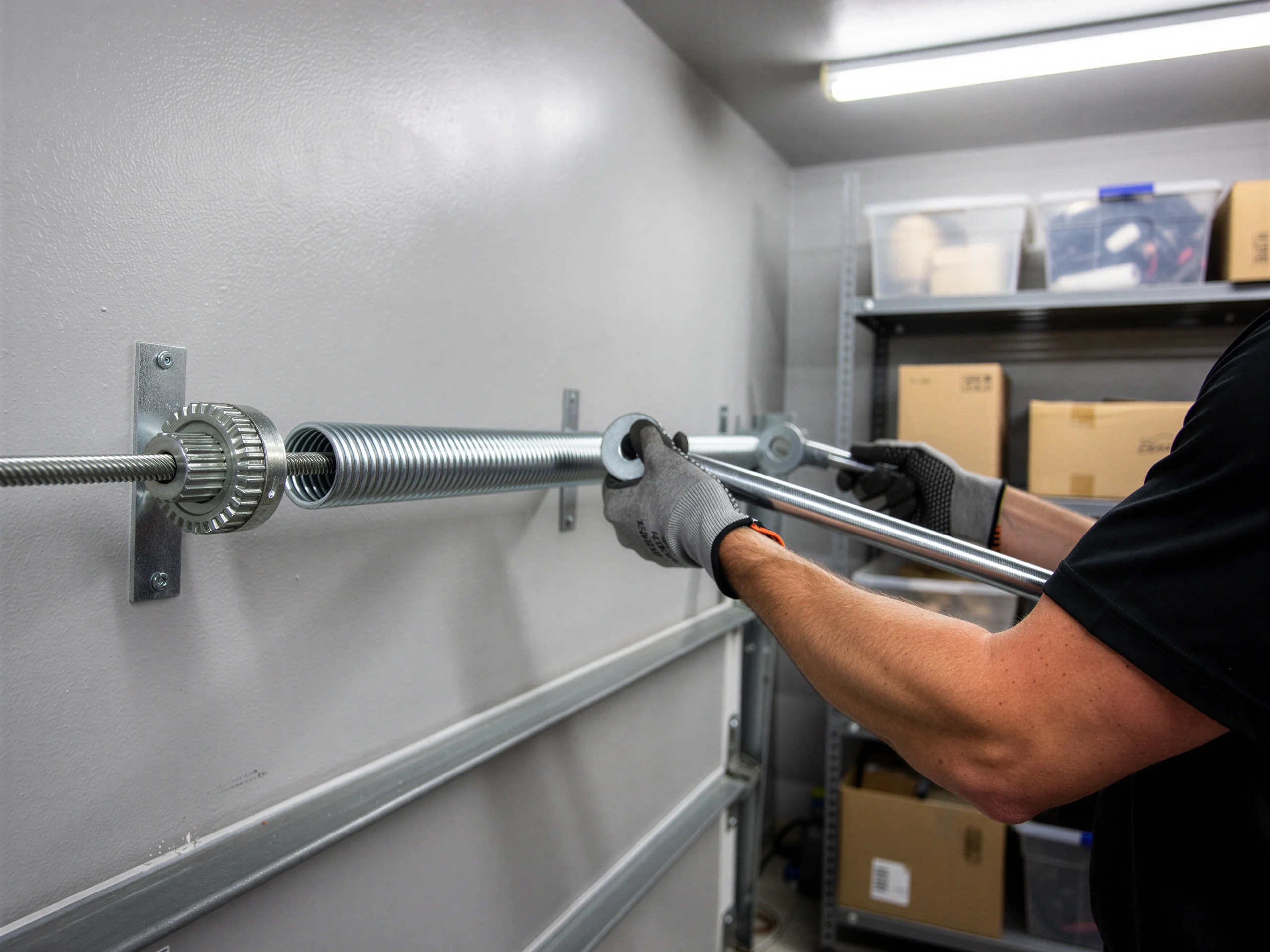
If the door won't open and you hear the opener motor running, check the manual lock lever on the track; it gets bumped more often than people admit. Past that, stop. A torsion spring under load, on hardware that's close to fifty years old in some of these houses, is not a project to learn on.
Winding tool scarcity
The spring is wound to hold the full weight of the door, and the tool for it is not a thing most garages have. We'll always tell you honestly on the phone if what you're describing sounds like a ten-minute fix you can do yourself before we book a truck for it.
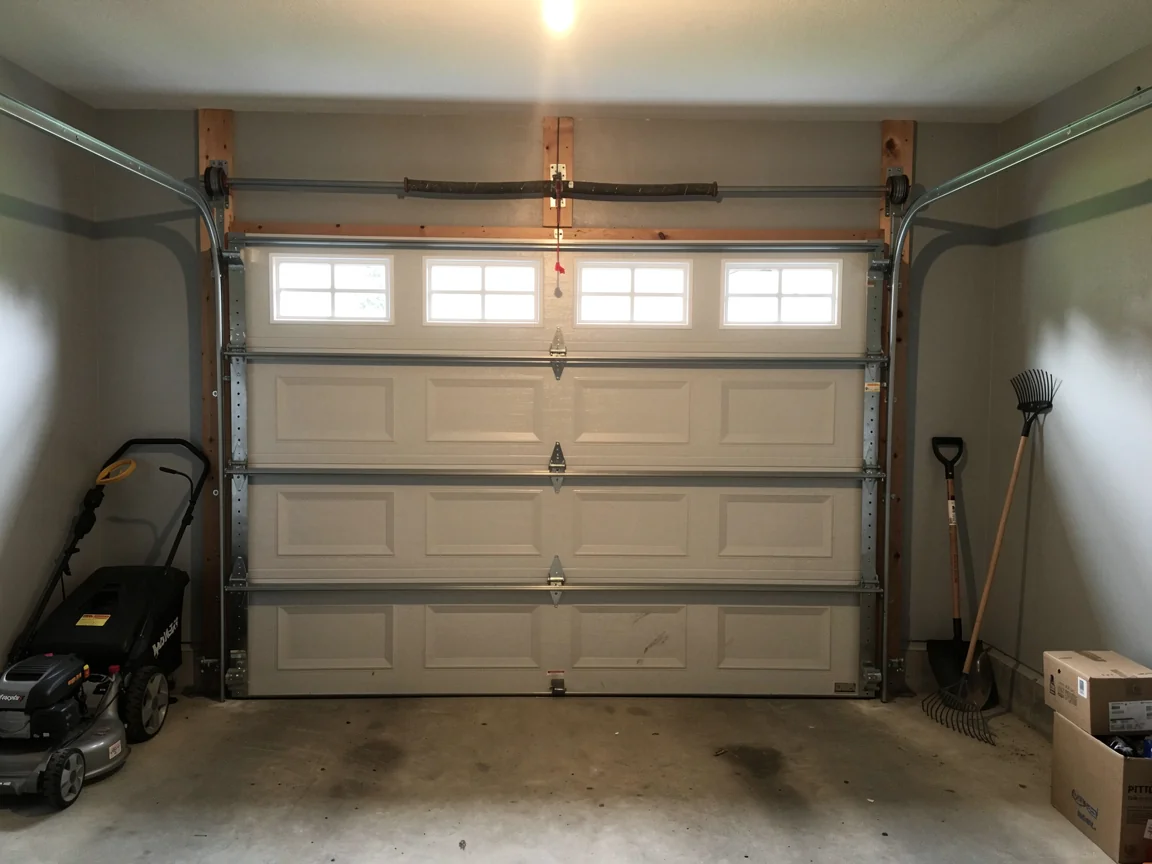
How We Fix It
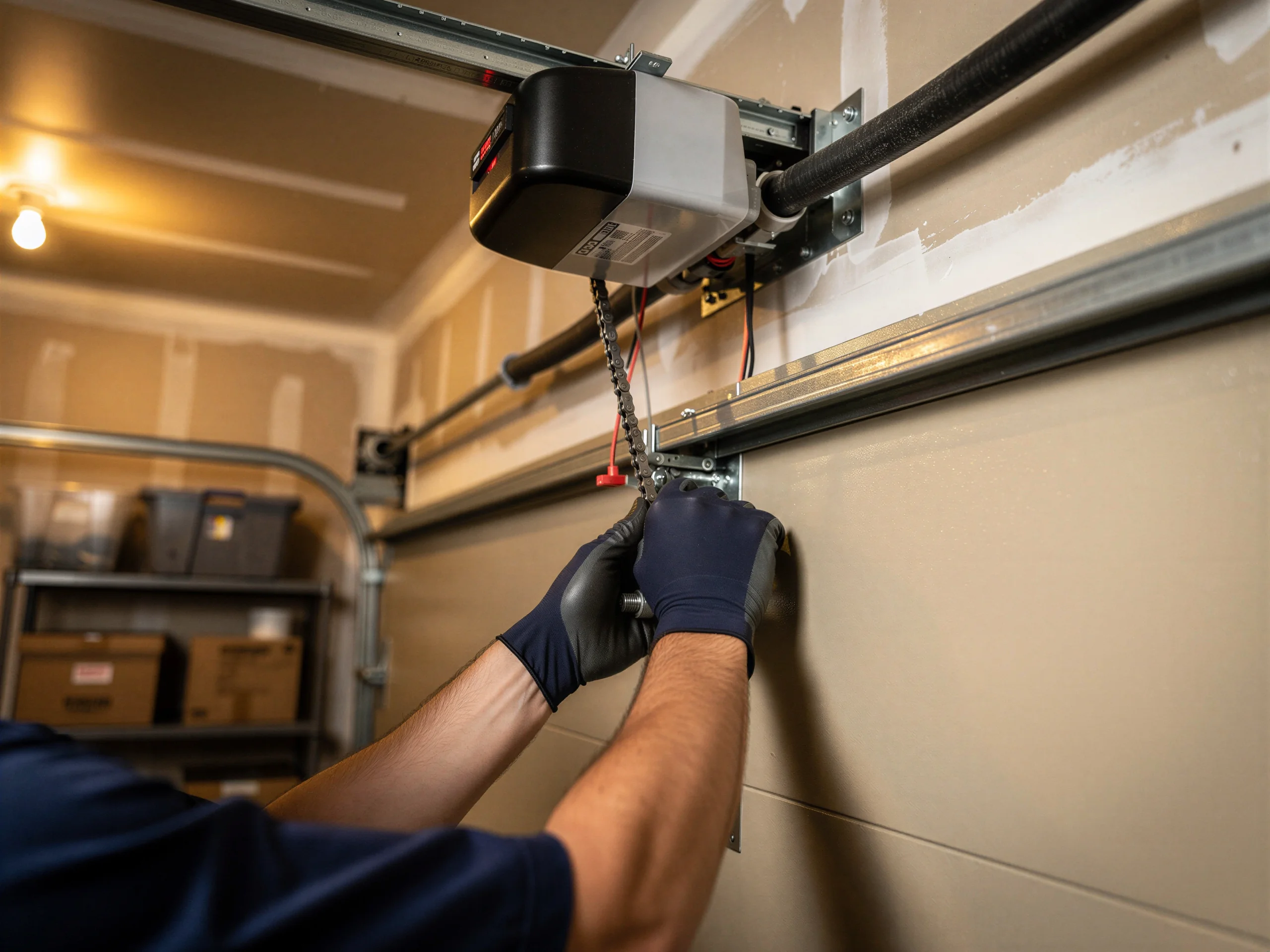
A town built out mostly through the 1970s means we see a specific pattern of failure here: steel doors on roller tracks that have never been replaced, chain-drive openers from a decade or two of upgrades layered on top of original hardware, and torsion springs that are original to the house and well past the cycle count they were rated for.
Uniform job-start checks
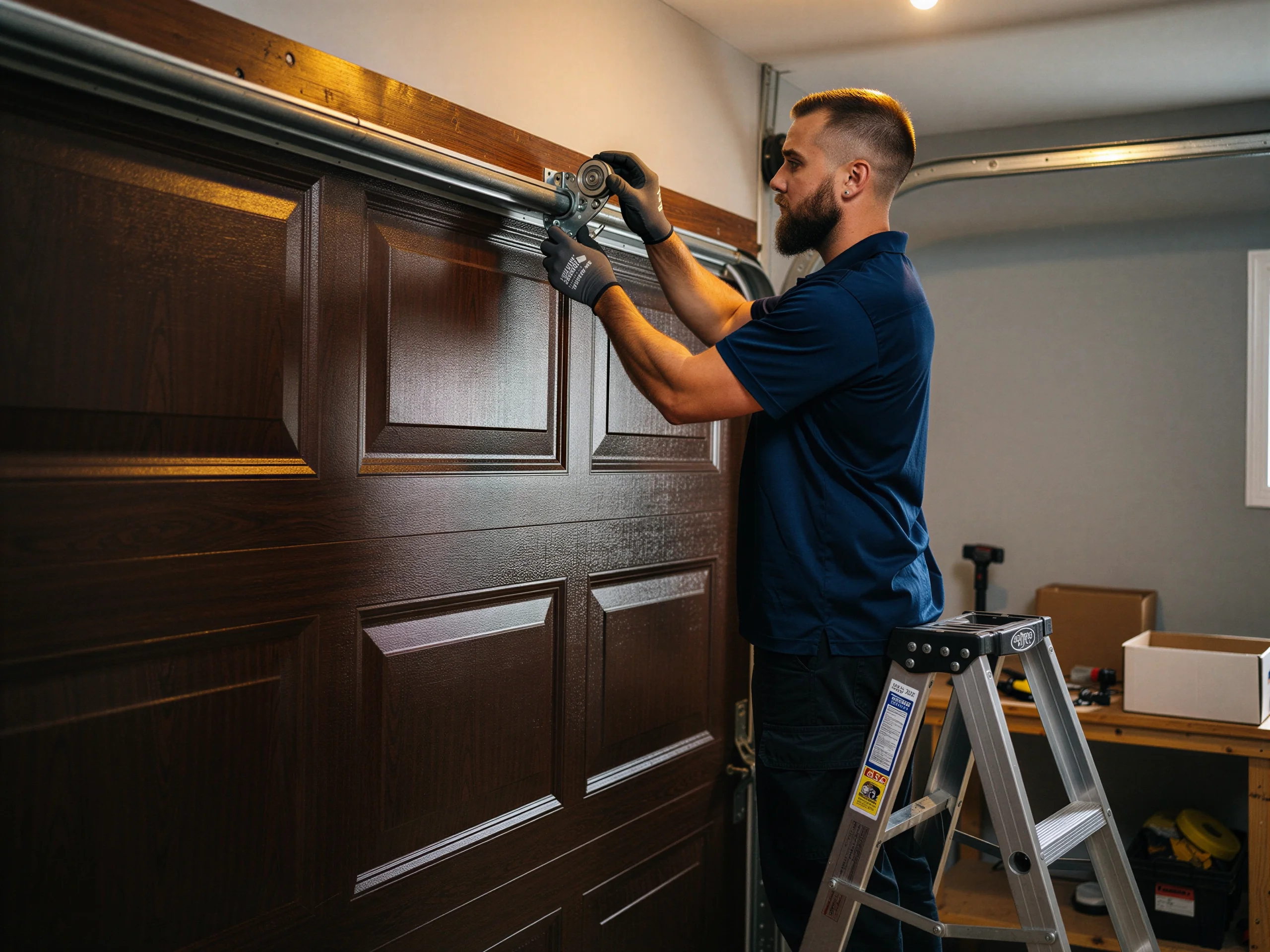
We start every job the same way - we look at the track alignment, the spring wind, and the opener's force setting before we touch anything, because on a door this age, more than one part is usually close to failing even if only one part broke today.
Drum-first cable replacement
Replacing a cable without checking the drum it's wound on is how a callback happens. We repair what's repairable: a snapped cable, a bent track section, a stripped gear in the opener.
Steel dent limits
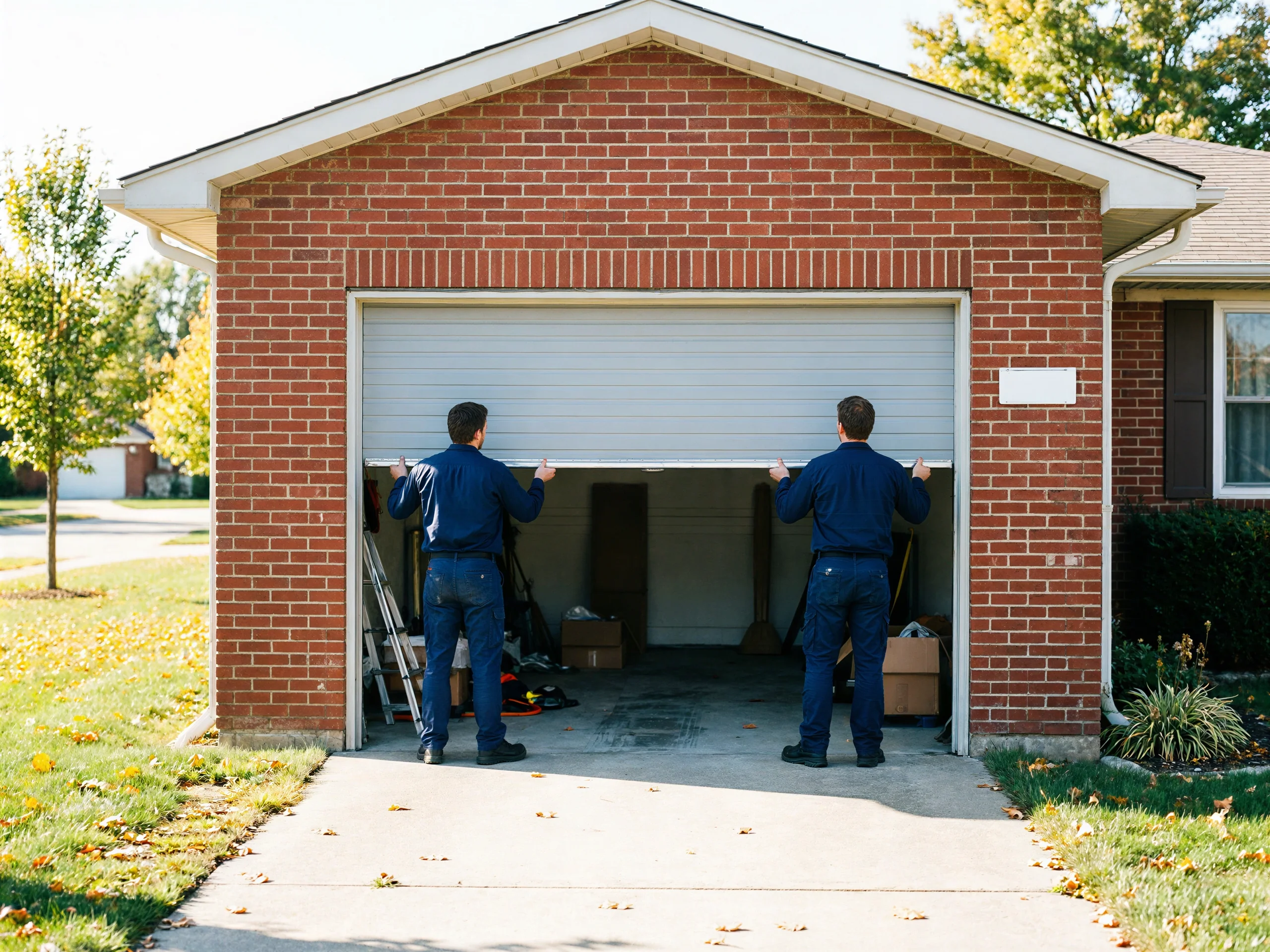
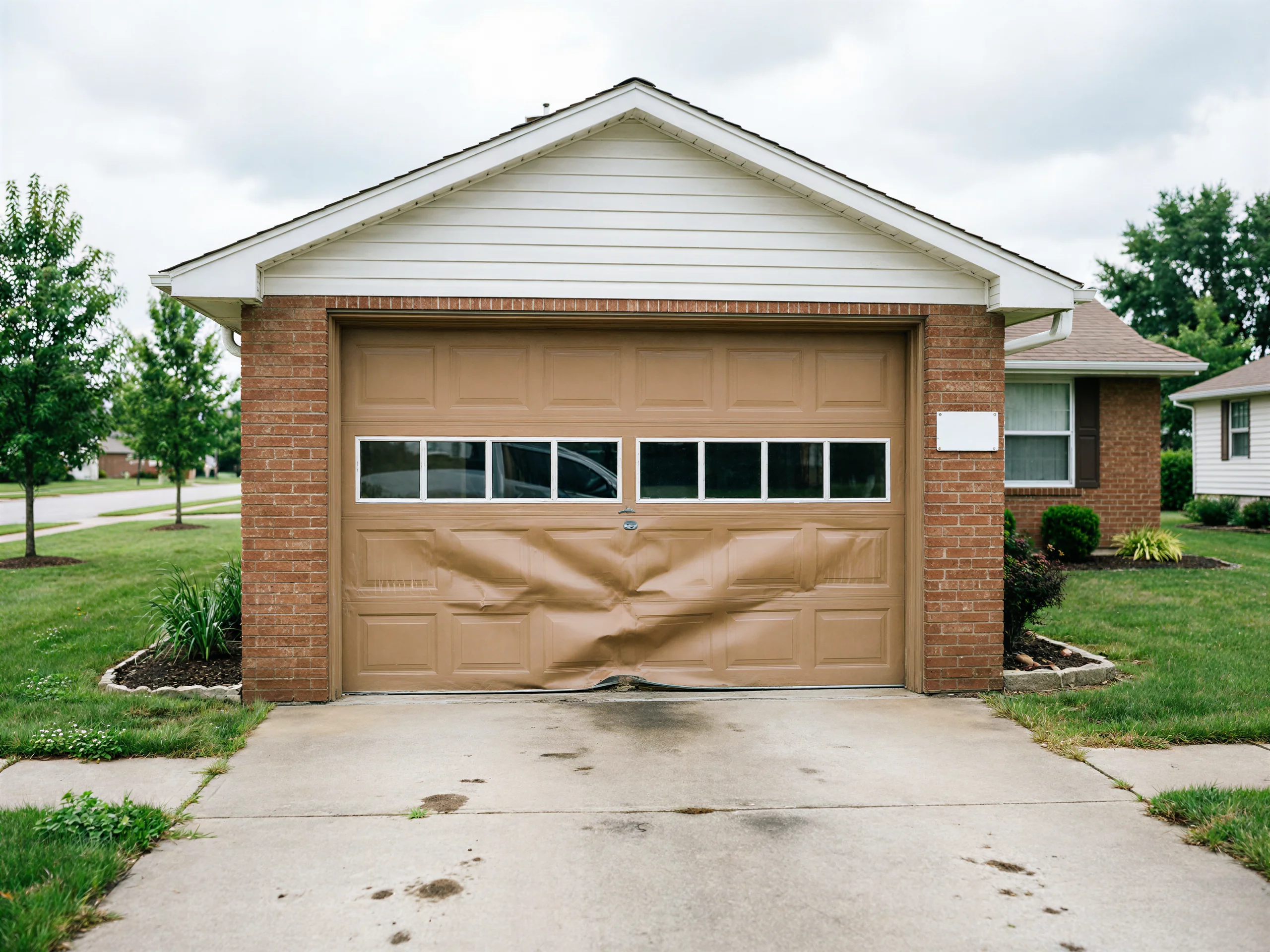
We tell you straight when the door itself is the problem - steel from the 1970s doesn't take a dent and pop back, and a panel that's buckled from one bad impact usually needs a new section, not a patch.
What Is on the Truck
Because the housing stock in this part of our service area mostly dates to the 1960s and 70s, we carry torsion springs sized for the shorter, lighter doors those houses tend to have, along with the older-style roller and track hardware that newer stock doesn't use anymore. We also carry the openers and circuit boards that cover both the newer chain-drive units homeowners added later and the belt-drive replacements people ask for now.
What we don't carry is every obsolete part for every decade of door ever installed. If a house still has its original hardware from the late 1930s era represented across the wider area, some parts for that specific door may need to be special-ordered rather than pulled off the truck - we'll tell you on-site if that's the case rather than promise a same-visit fix we can't back up.
For the more common 1960s-70s single and double doors, cables, rollers, hinges, and standard springs are stocked and go on the truck every day.
Booking a Visit
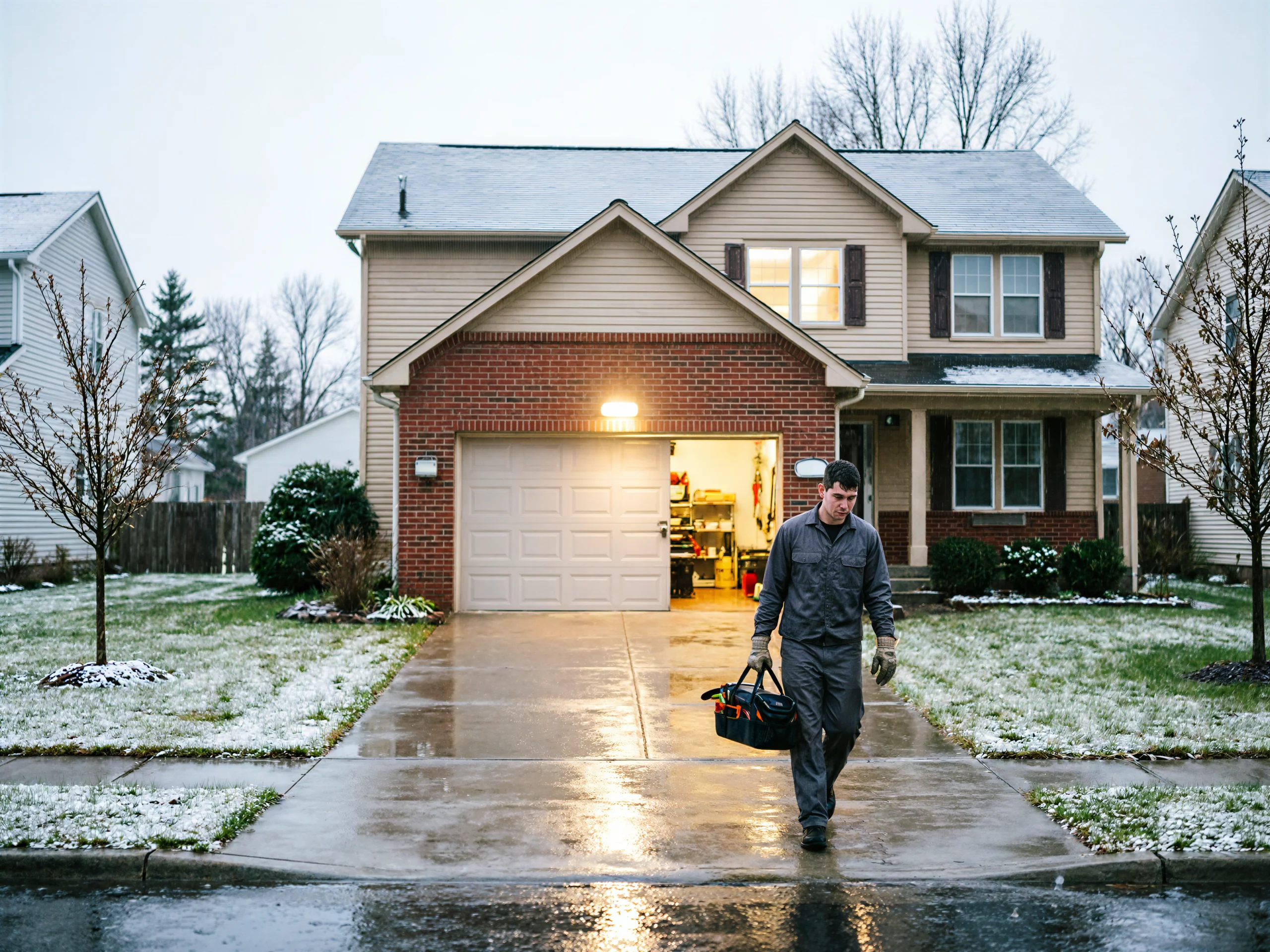
We cover Itasca from our base in Elk Grove Village, about 2 miles away, along with the other towns on our route. Call and tell us what the door is doing - won't open, opens then stops, makes a bang and drops - and we'll tell you what we expect to need before the truck leaves.
Household income here runs higher than the service-area median of $105,461, and we've found that often means people want the straight repair cost up front rather than a guess. We give you that on the phone when the fault is one we can diagnose from your description; some faults we have to see in person first.
You can also check coverage details for this town directly.
How It Shows Up
On a door built or installed in the 1970s stretch that covers a lot of Itasca, failure tends to look like wear, not a single dramatic event.
Gradual tension loss
Springs lose tension gradually, so the door gets heavier to lift by hand over months before it finally won't lift at all. Rollers wear down and start rattling in the track before they jump it.
Opener warning signs
Openers usually give a warning - grinding, slow travel, a light that flickers - before the gear finally strips. Sudden failures do happen: a cable frays and snaps, usually on the side that's taken more weight over the years, and the door drops unevenly or won't move.
Winter hardware stiffening
Cold matters here too - this area sits in a cold climate band, and a steel door's hardware stiffens up in winter, which is when marginal springs and tired openers are most likely to finally give out.
How Long You Are Without the Door
Most of what we see on doors from this stretch of housing - a broken spring, a snapped cable, a bad roller, a dead opener - is a single-visit repair once we're on-site with the right parts, which is why the truck is stocked for the common torsion-spring and roller sizes this housing age uses.
What takes longer: full panel sections on an older steel door, or a special-order part for original hardware the house has kept since it was built. In those cases you may be waiting on parts rather than waiting on us, and we'll tell you that difference up front instead of letting a vague timeline sit unexplained.
We don't promise a response time for Itasca specifically since we're routing from Elk Grove Village rather than based in town - ask when you call and we'll give you a real window for that day.
Talk to a local pro
Garage door service in Elk Grove Village?
Same-day service with honest, upfront quotes.