Doing It Yourself
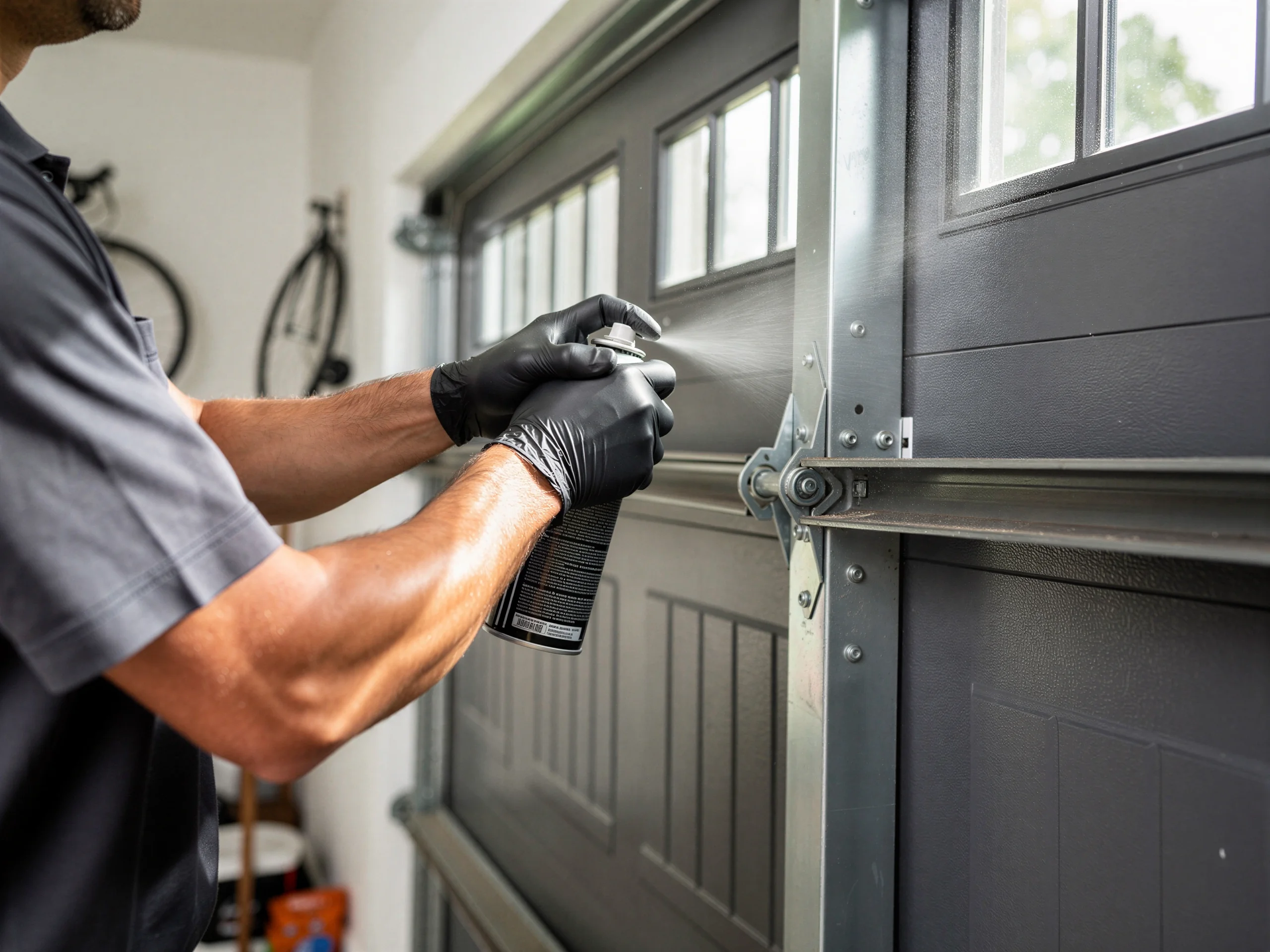
A lot of homeowners here start with a YouTube video and a trip to the hardware store. That's fine for a loose hinge or a squeaky roller.
Where DIY ends
It stops being fine the moment you're looking at a torsion spring, a bent track, or an opener that's original to a house built sometime between 1938 and 2001 - the range that covers most of Elk Grove Village's housing stock, with the bulk of it going up in the 1960s and 70s. The problem isn't skill, it's hardware.
Nonstandard spring sizing
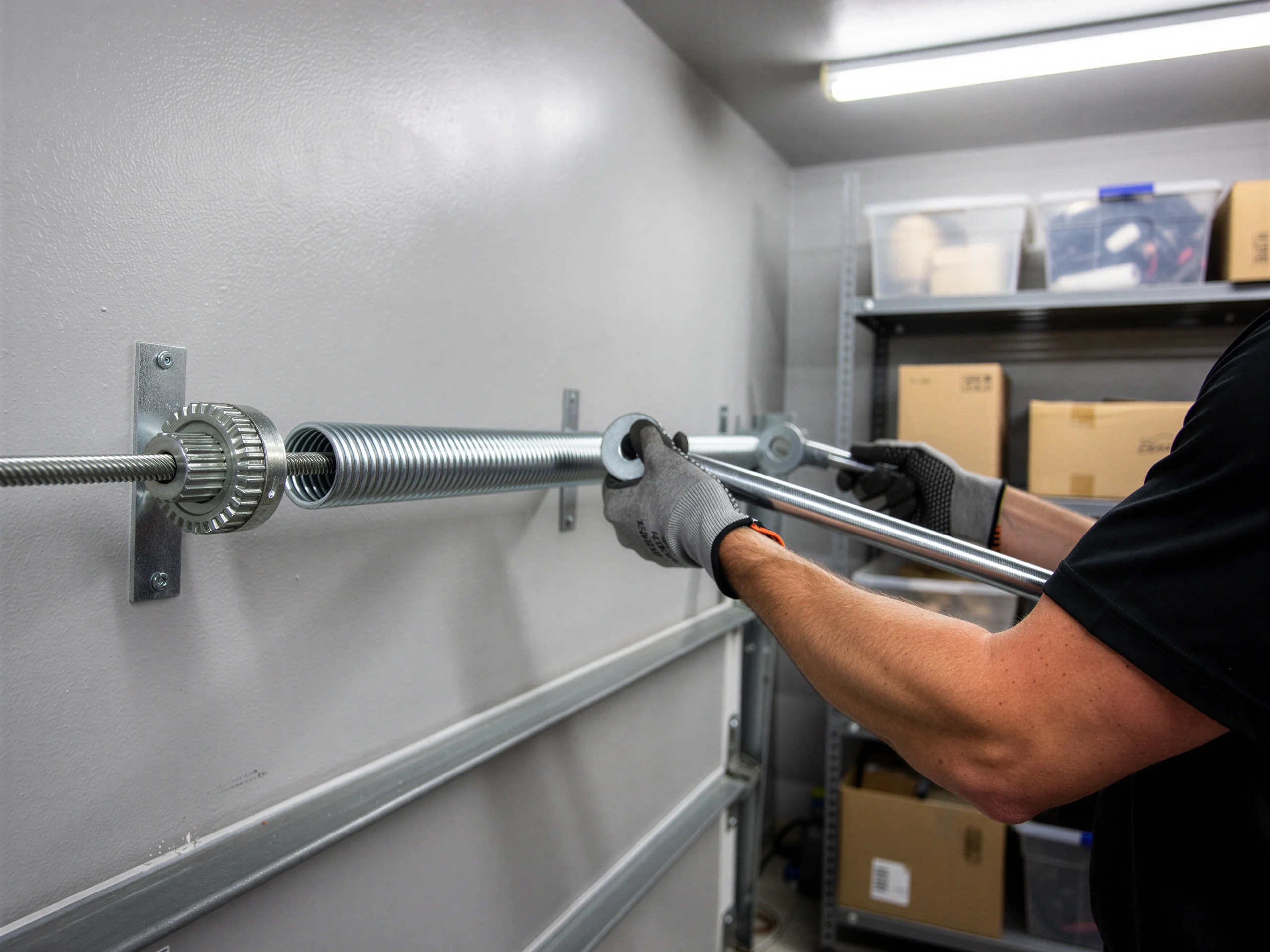
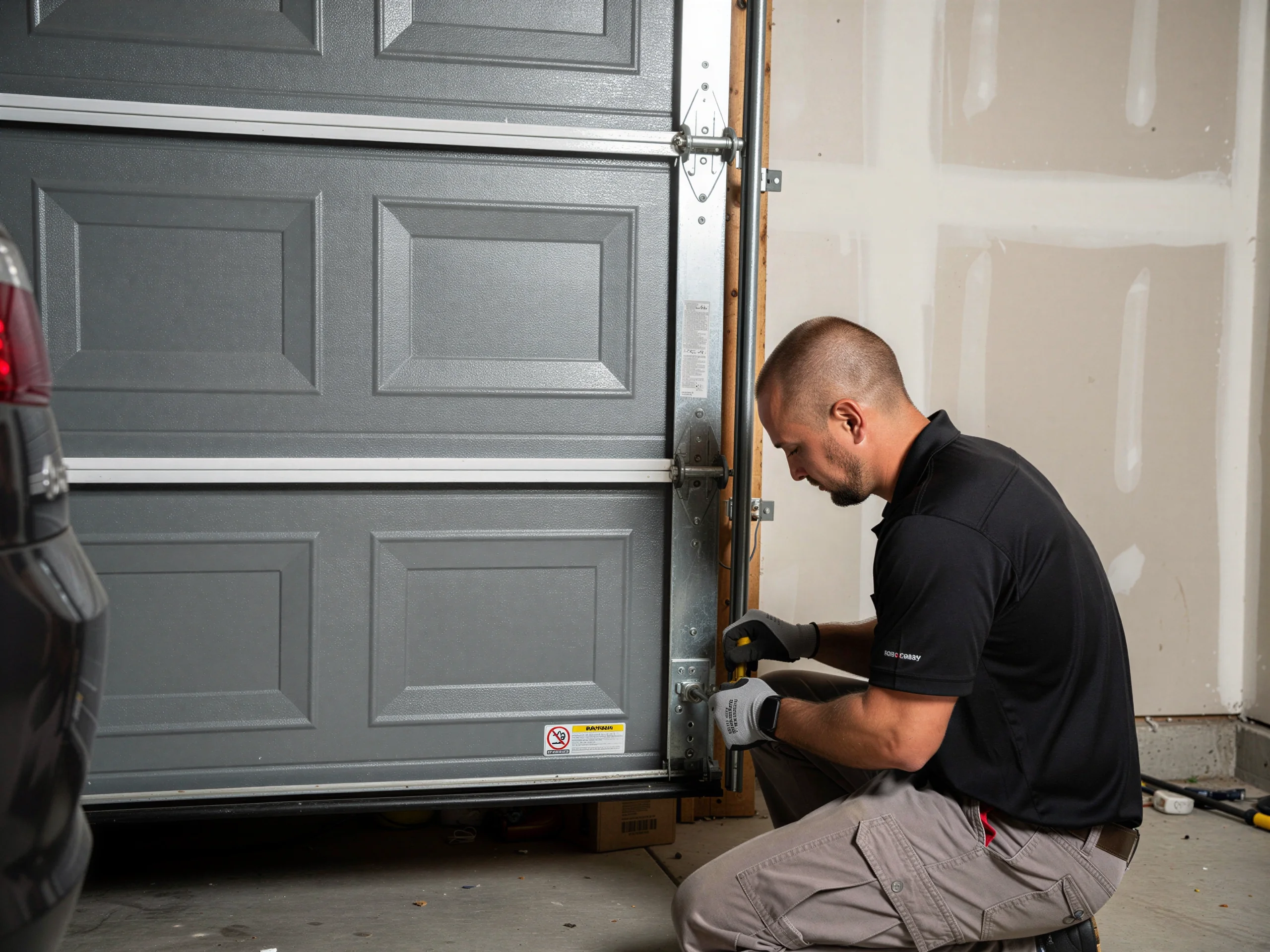
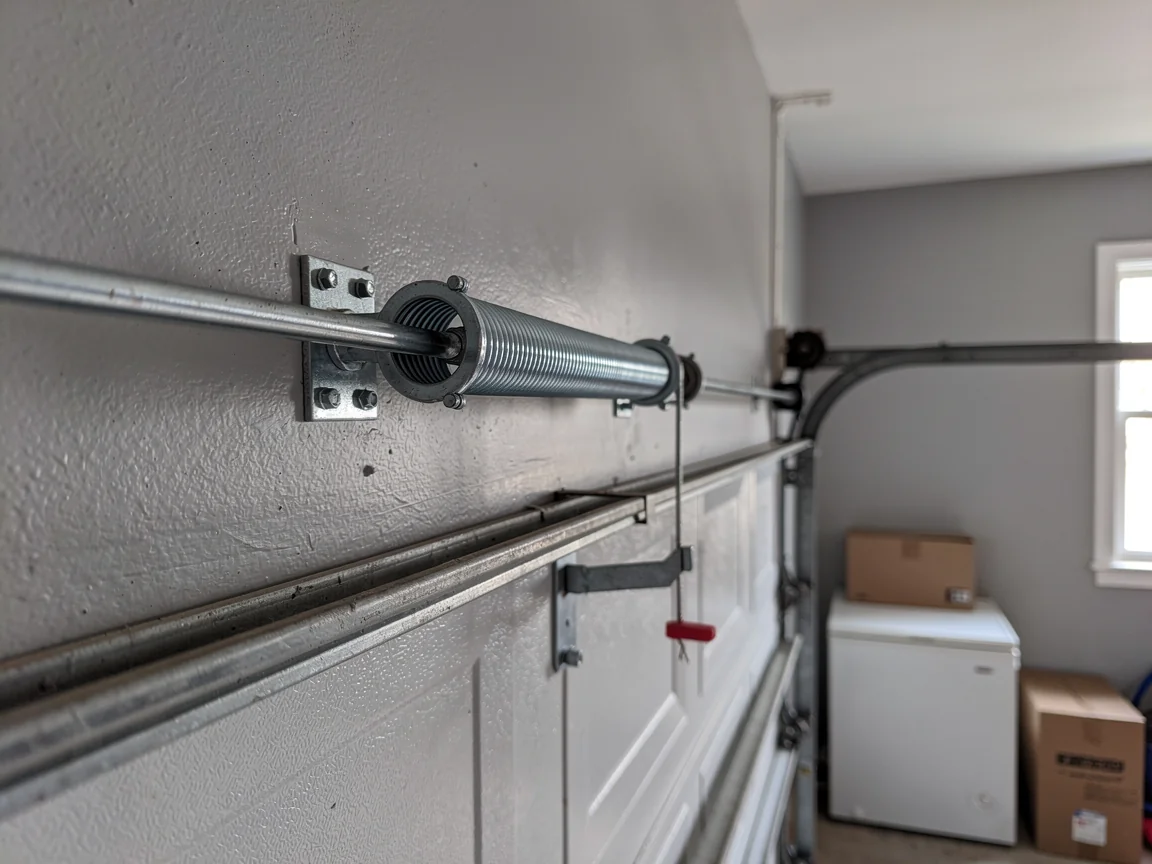
A door from that era often runs on a drum and cable system or a spring size that hasn't been standard for decades. You can find a generic replacement part online, but it won't match the drum diameter or the winding cone, and a mismatched spring under tension is how people end up in the ER.
Safe DIY tasks
If you're comfortable with a wrench and you know what you're looking at, swapping rollers or tightening hinges is reasonable DIY. Springs, cables, and anything that's wound under load is not.
Why This Fails Locally
Elk Grove Village sits in a cold-moderate climate band, which means the ground freezes and thaws every winter and the garage slab moves a little with it. On a door that's 40, 50, even 60 years old, that seasonal shift works tracks loose at the mounting brackets a little more each year. Combine that with original hardware - steel that's thinner than what's sold today, springs rated for loads nobody double-checked when the house was built - and you get doors that run fine for years, then fail all at once on a cold morning.
It's not that older construction was done badly. It's that it was built for a different era of expectations. A 1970-built door wasn't designed to lift a modern insulated panel or run a heavier opener someone installed later as an upgrade. That mismatch between original frame and newer motor is one of the more common failure patterns we see on service calls in this part of the service area.
How It Shows Up
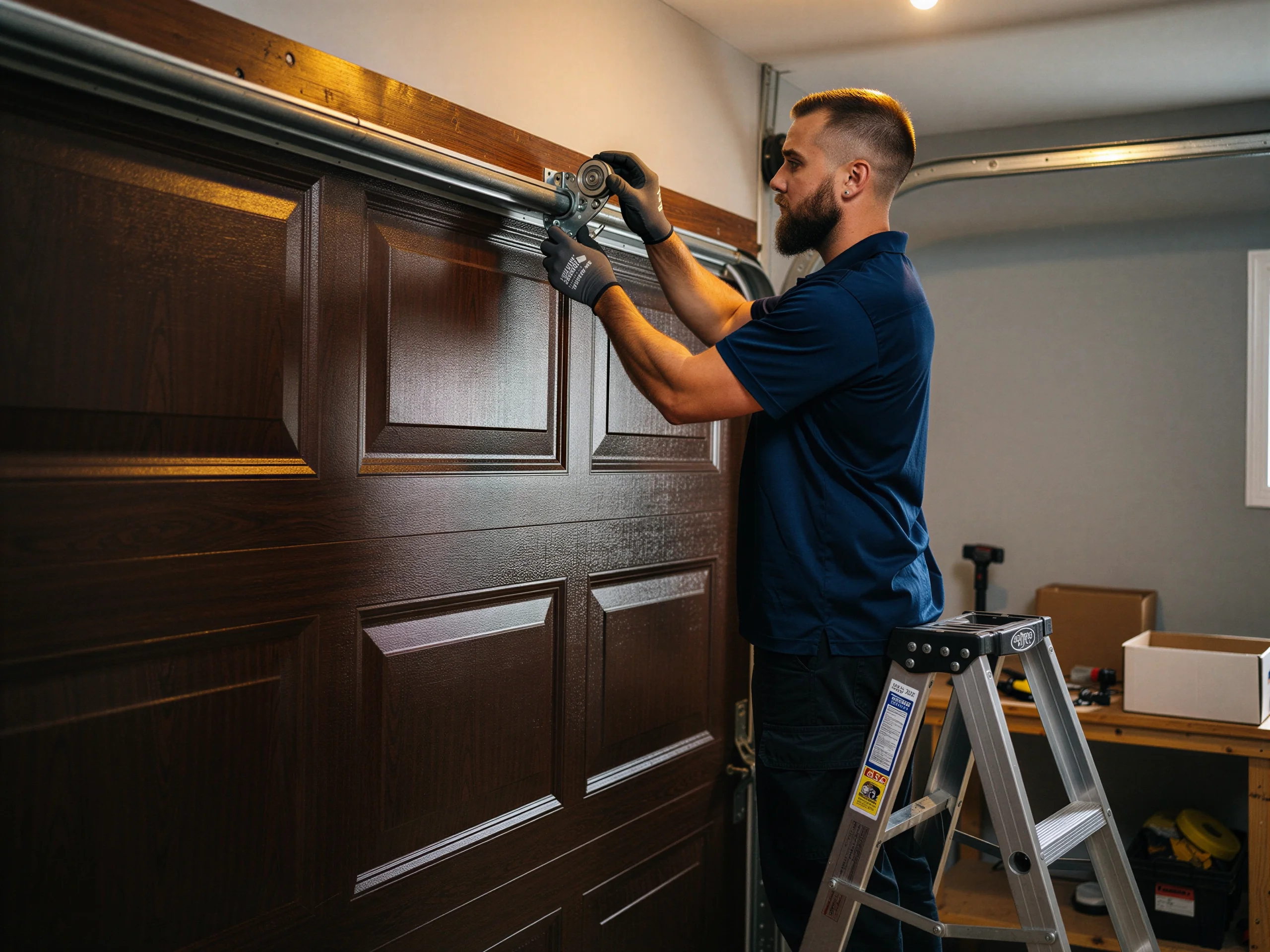
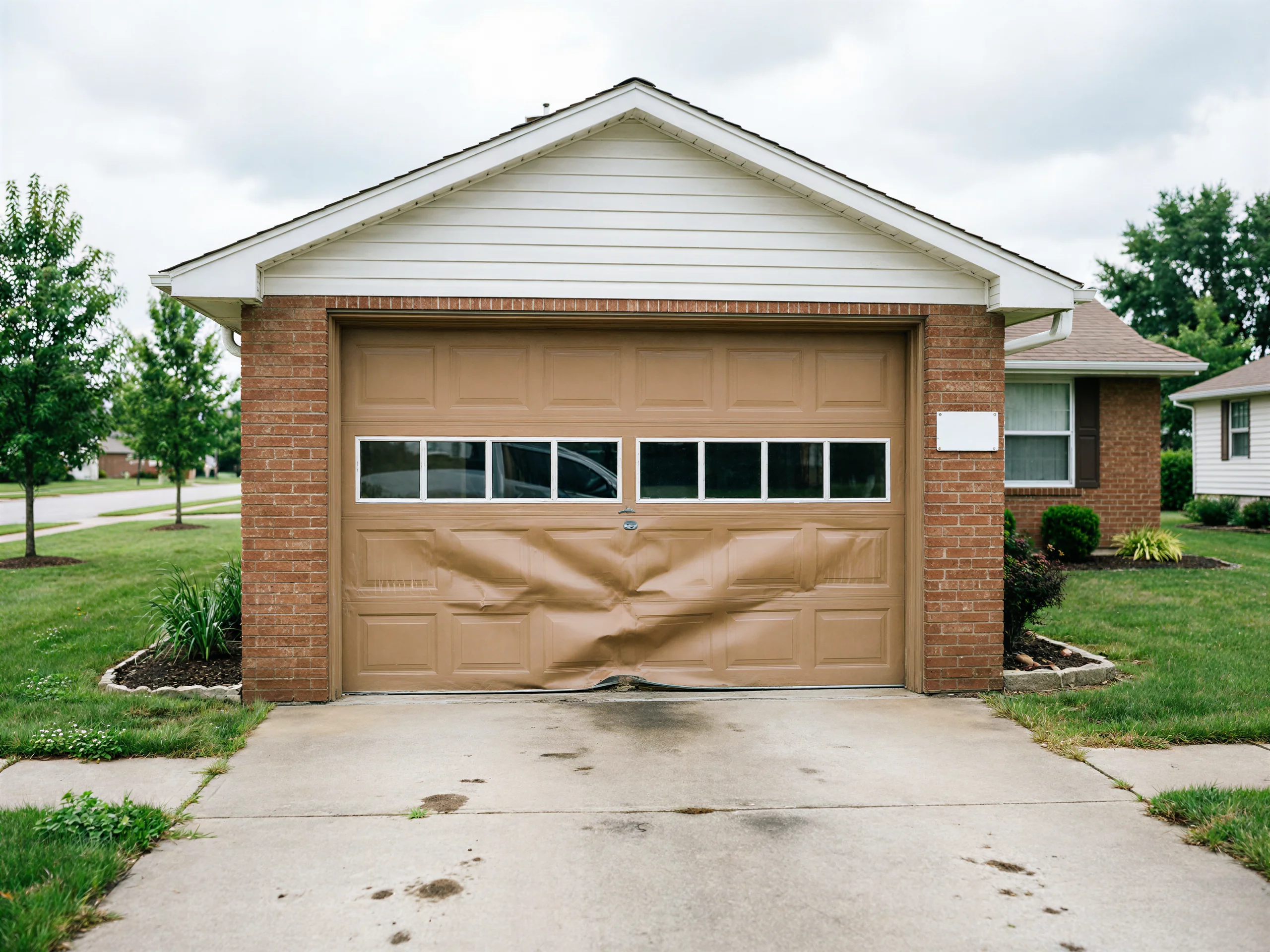
The door starts reversing partway up, or it slams the last six inches instead of settling. Sometimes it's a grinding noise right at the top of the track where an old bracket has worked loose from the header.
Strained opener signals spring
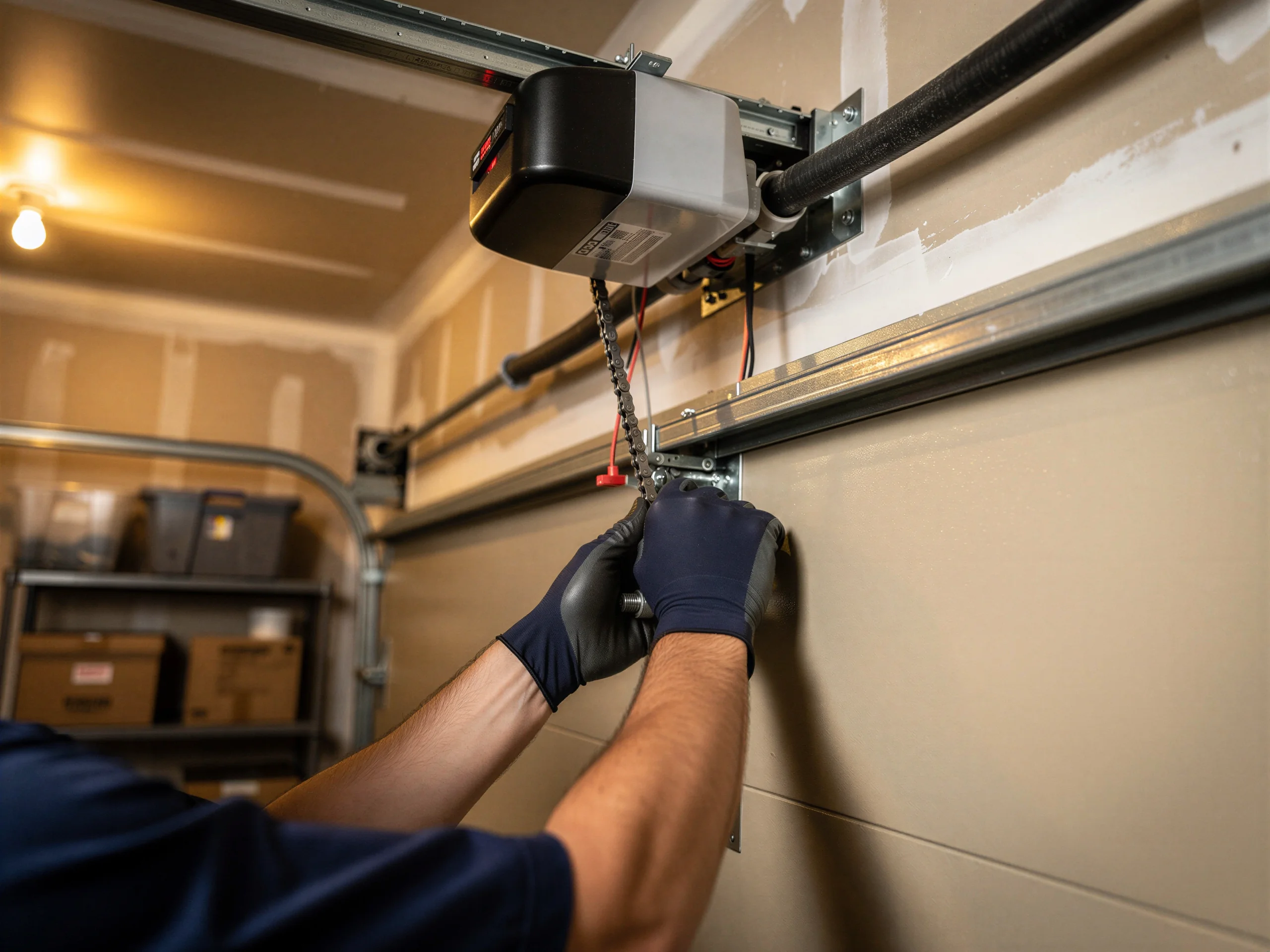
Other times the opener strains audibly - you can hear the motor working harder than it should, which usually means a spring has lost tension and the opener is doing a job it was never meant to do alone.
Cold mornings worsen binding
On colder mornings, the symptoms get worse before they get better: a door that moved fine in October suddenly binds or won't fully close once the slab temperature drops. That's the freeze-thaw cycle doing its slow work on original hardware, not a one-time glitch.
How We Fix It
We start by checking what's original and what's been replaced, because a house from the 1976 median build year might have a factory door with a 2015 opener bolted onto it, and the fix depends on which part is actually failing. If it's spring tension, we size and replace to match the current door weight, not just swap in whatever's closest. If it's a track or bracket that's worked loose from decades of seasonal movement, we re-anchor it to the header properly rather than just tightening the existing bolts back into worn wood.
We won't tell you to replace a whole door when the fix is a spring and a bracket - but we also won't keep patching a track that's been reset three times already. At some point older hardware has given what it's got, and we'll say so plainly instead of running up a bill on repeat visits.
Talk to a local pro
Garage door service in Elk Grove Village?
Same-day service with honest, upfront quotes.