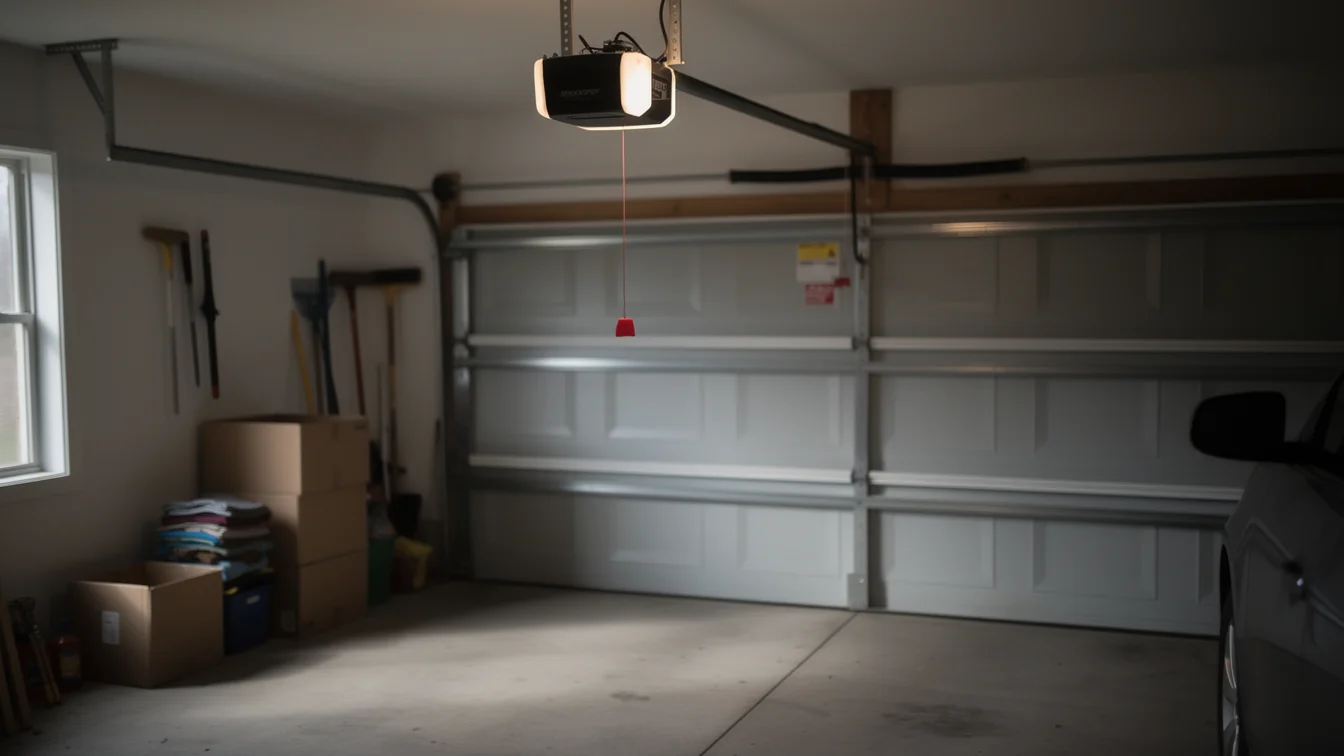
Openers, Power Cuts, and the Houses in Elk Grove Village
How Elk Grove Village's older housing stock and cold winters affect garage door openers during power cuts, and what's worth checking before you call for a repair.
Read moreWhy torsion springs snap in cold Elk Grove Village winters, what 1960s-70s era doors tell you, and when to call versus wait for a thaw.
Local detail
Before you call anyone, look at the spring itself. On most houses around here, built anywhere from 1938 up through the early 2000s with a median around 1976, you've got a single torsion spring mounted above the door on a shaft, or on older setups a pair of extension springs running along the horizontal tracks. A broken torsion spring usually shows a visible gap in the coil - the metal separates cleanly and you can see daylight through it. If the door won't budge, or it feels like the opener is straining and groaning before it stalls, that's your sign.
Don't try to lift the door past that point and don't disconnect the opener and muscle it open by hand if the spring's gone - a broken spring means the door has no counterbalance, and a double door panel can weigh well over a hundred pounds. Check that the opener light isn't just blinking an error code for something unrelated, like a sensor out of alignment. If the spring is intact and the door still won't move smoothly, the problem might be a track or roller issue instead, which is a different fix entirely.
The area
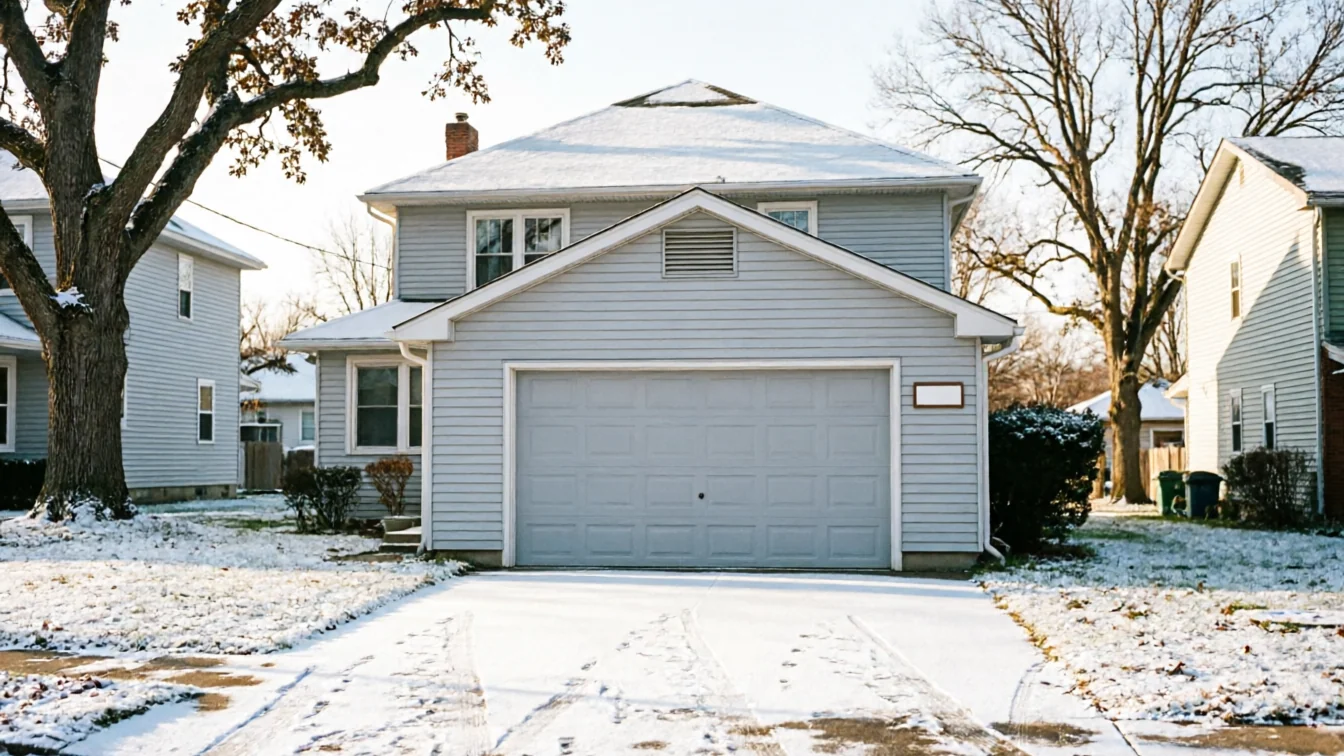
A lot of the housing stock in this part of the county went up in the 1960s and 70s, and that matters here because torsion springs have a service life measured in cycles, not years - typically somewhere in the 10,000-cycle range for a standard residential spring. A door installed when a house was built in 1968 and never upgraded is well past any reasonable spring life by now, even with light use. That's the situation on a lot of these original setups: the spring isn't failing because of bad luck, it's failing because it's old and it's been doing its job for decades.
We don't carry or stock every obsolete spring size and wind direction from that era on the truck - some of the oddball residential winding configurations used on older torsion shafts aren't something we keep on hand, and if that's what you've got, there may be a short wait while we source the right one. Standard modern torsion springs sized to your door's weight are a same-visit job in most cases.
What we find
This area sits in a cold, moderate climate band, and that temperature swing is hard on spring steel. Metal contracts when it's cold, and a spring that's already near the end of its cycle life loses a little flexibility with every hard freeze. The failures cluster in winter for a mechanical reason: the steel is stiffer, the lubricant inside the coil thickens up, and the first heavy lift of the morning - cold garage, cold door, cold spring - is exactly the load that finds the weak point.
It's not that cold weather damages a healthy spring outright. It's that a spring already worn down from years of cycling gets pushed past its limit by the extra resistance cold steel adds to every wind and unwind. If your door has felt heavier or slower over the last few cold mornings before it finally let go, that's the pattern, not a coincidence.
How we work
If the spring has broken clean and the door is down, it's fine to leave it alone for a day or two in winter - closed is closed, and a broken spring doesn't let your garage lose any more heat than it already does. Don't force the opener to keep trying; repeated stalls can burn out the motor or strip the drive gear, and that turns a spring job into an opener replacement too.
What's not worth leaving alone is a spring that's frayed or stretched but not yet snapped - those give you a warning window but they don't fix themselves, and they tend to go at the worst moment, like a cold Saturday morning with the car trapped inside. If your door is from the original build era of a lot of homes around here, decades old on its original torsion hardware, it's worth having it looked at before it breaks rather than after.
Questions
Spring steel gets stiffer in cold weather, and a spring near the end of its cycle life has less give left to absorb that stiffness. The first cold morning lift after a hard freeze is often the one that finally finds the weak point in a spring that's been wearing down for years.
Not without disconnecting carefully and understanding the risk - with the spring gone, the door has no counterbalance and a double panel can weigh over a hundred pounds. It's safer to leave it closed and call for a same-visit spring replacement than to force it open yourself.
If the door is already down, yes - closed is closed, and it won't make your garage any colder. Just don't keep triggering the opener trying to force it, since repeated stalls can burn out the motor on top of the spring problem.
Recommendation
More garage door guides for Elk Grove Village homeowners.
How Elk Grove Village's older housing stock and cold winters affect garage door openers during power cuts, and what's worth checking before you call for a repair.
Read more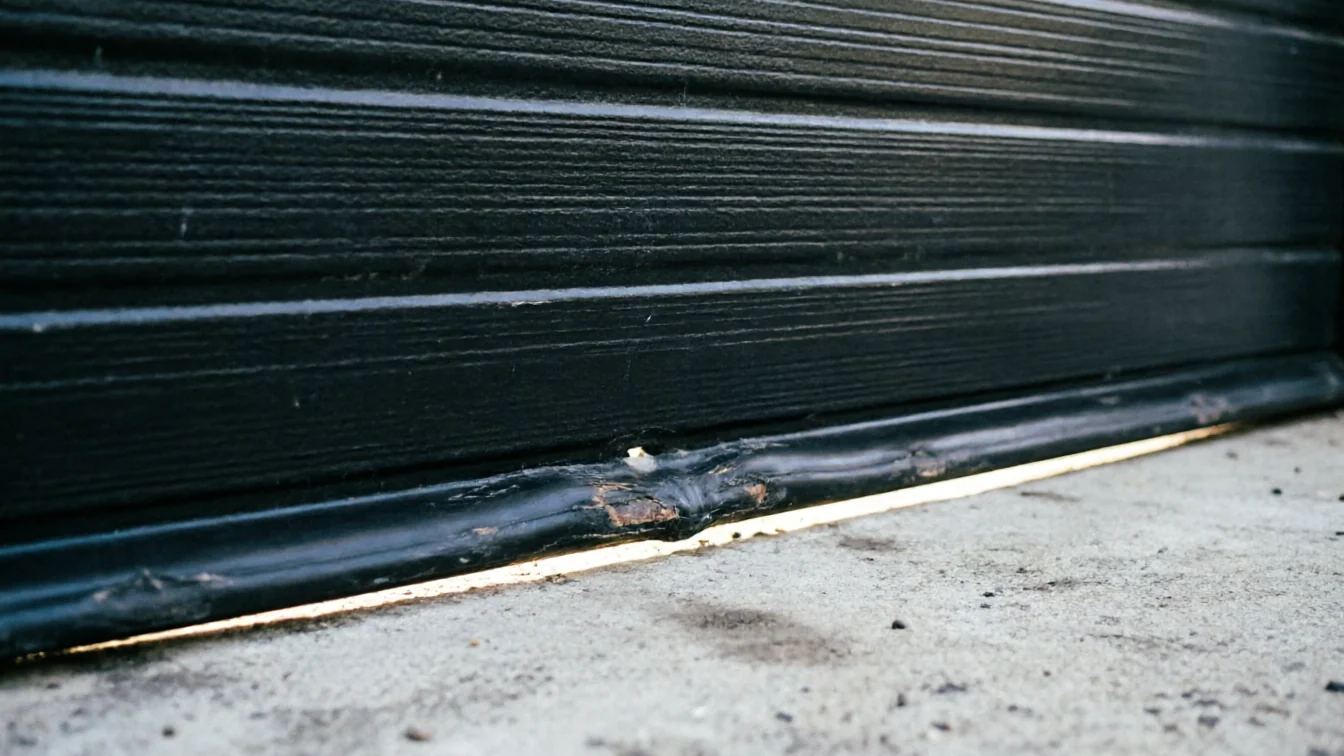
A look at why weather seals and draughts show up on Elk Grove Village garage doors, tied to the area's 1938-2001 housing stock and cold winters.
Read more
A look at what a garage door service call checks and fixes for Elk Grove Village homes, where 1960s-70s hardware meets cold winters and real wear.
Read moreReady when you are
Elk Grove Village Garage Door Pros repairs and installs garage doors, springs and openers in Elk Grove Village, IL and the surrounding area.