Doing It Yourself
A dented or cracked panel looks like a simple swap: unbolt the hinges, drop in a new section, bolt it back. On paper that's true.
Vanished manufacturer lines
In practice, most houses in this part of the service area were built between 1938 and 2001, with a lot of that stock going up through the 1960s and 70s, and the doors on those houses came from manufacturers who've changed their panel profiles, bolt spacing, and steel gauge several times since.
Online panel mismatch
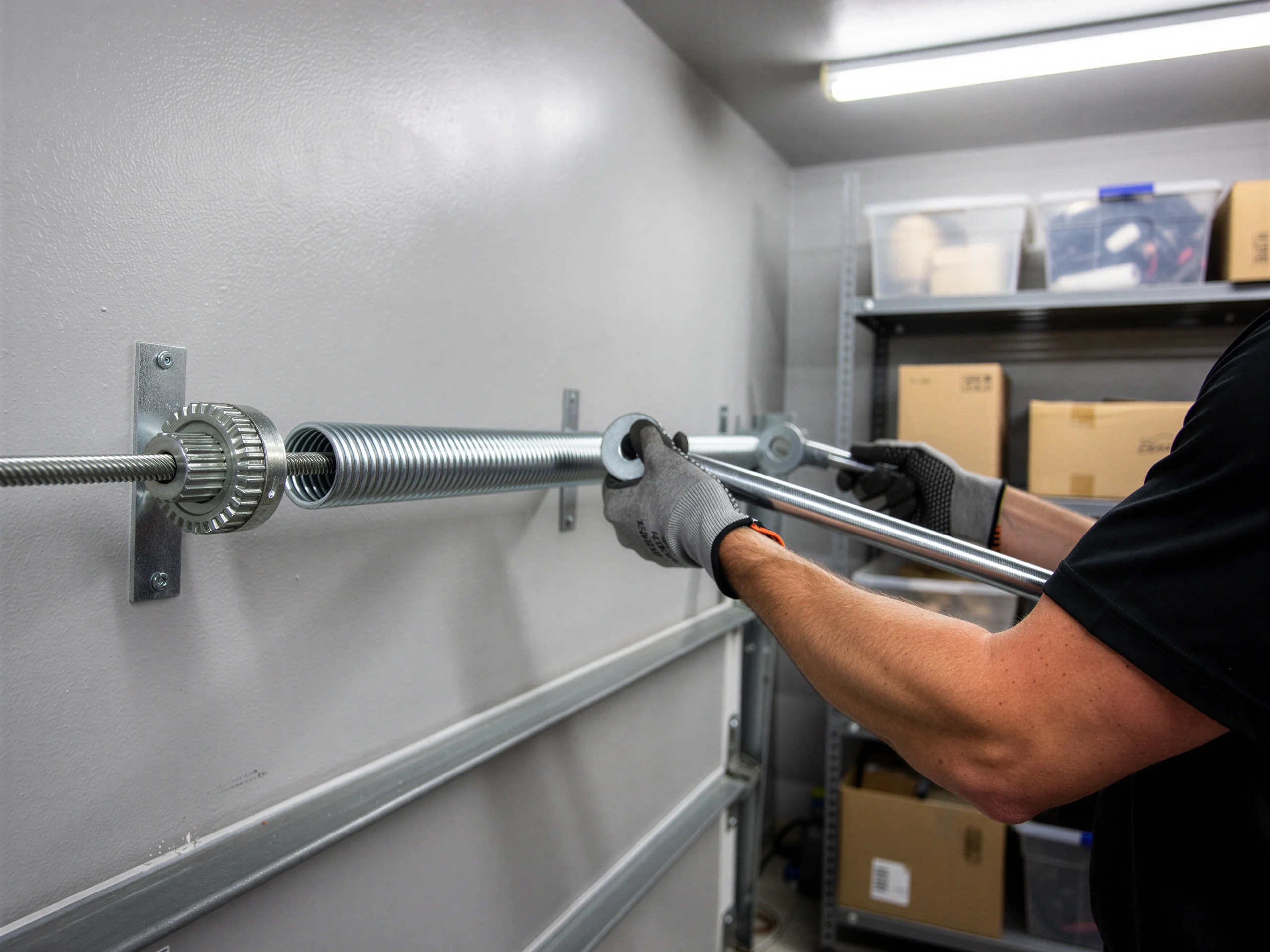
You order a "matching" panel online and it's close but not close enough - the ridges don't line up, the seams show, and now you've got a door that looks worse than the dent did. There's also the weight and alignment problem. Pull one panel out of a torsion-spring door and the whole section is under tension until it's reset properly.
Hinge pattern misalignment
Get the hinge pattern or the track alignment even slightly off and the door binds on the rollers or won't seal at the bottom - which matters more here than in a milder climate, because a gap at the bottom is a gap that lets cold air straight into the garage all winter.
Simple end-panel job
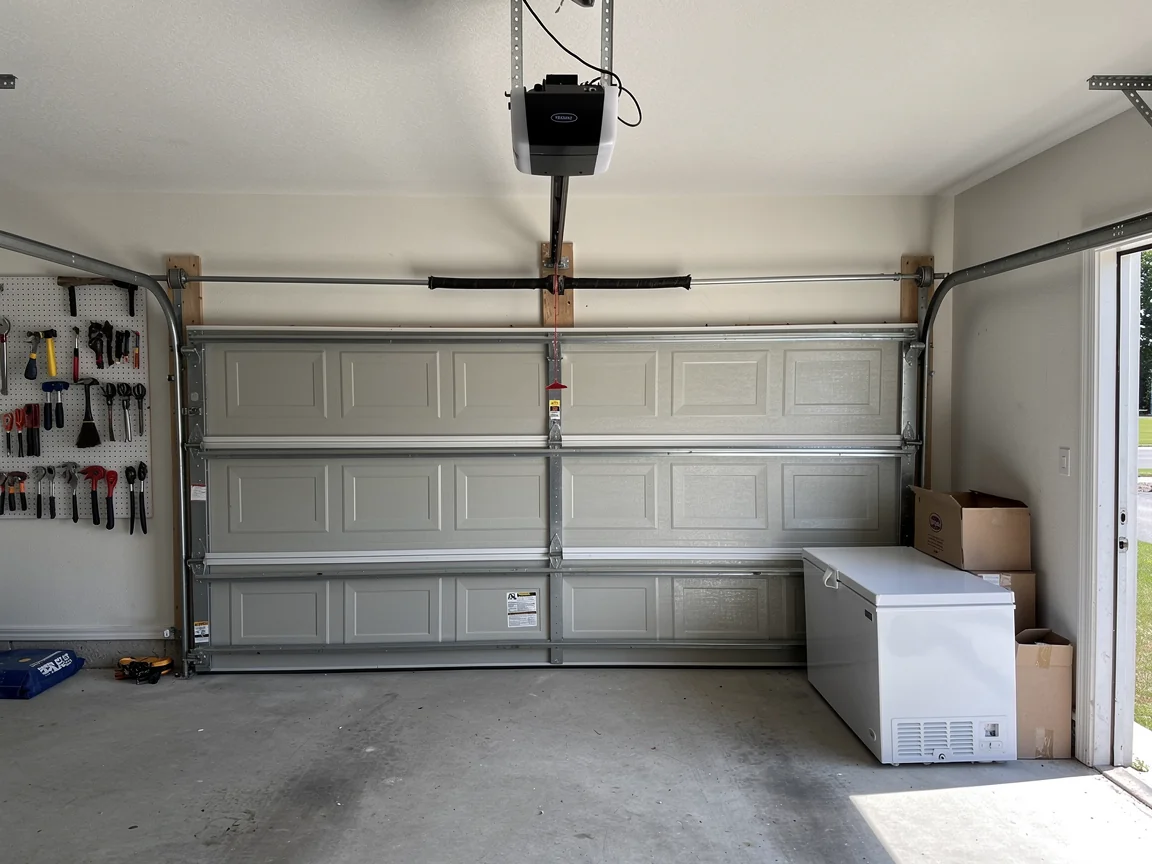
If you've got a newer door, matching steel, and basic tools, a single end panel can be a reasonable weekend job. Anything involving the bottom section, the full width of a double door, or a design more than a decade or two old is where we see most DIY jobs turn into a second call to a garage, and usually a bigger bill than if we'd done it from the start.
Why This Fails Locally
This is a cold-moderate climate zone, and the housing stock that dominates the area - median build year around 1976, spread across roughly 90 named neighborhoods in the wider service area - means a lot of doors are original or close to it, built for a design era that didn't plan for 40-plus winters of expansion and contraction. Steel panels flex with temperature swings, and on older doors the steel gauge is thinner than what's sold today. Thin steel plus repeated freeze-thaw cycling is what turns a small dent into a crease that won't pull back out, and a crease into a panel that no longer seals against the weatherstrip.
Households here skew owner-occupied - roughly half the housing in the broader service area is owner-occupied houses rather than rentals - which means the door is the homeowner's problem to solve, not a landlord's. That's part of why panel-matching gets asked about so often here: people want to fix one section on a door that's otherwise sound, not replace the whole unit, especially when the house itself is 40 or 50 years old and the door still mostly works.
The failure mode is almost always localized: one section catches a bumper, a basketball, a snowblower on the way past. It doesn't usually take the opener or the spring with it, which is good news - it means the fix can often stay small if it's handled before the bent panel starts pulling the track out of square.
How It Shows Up
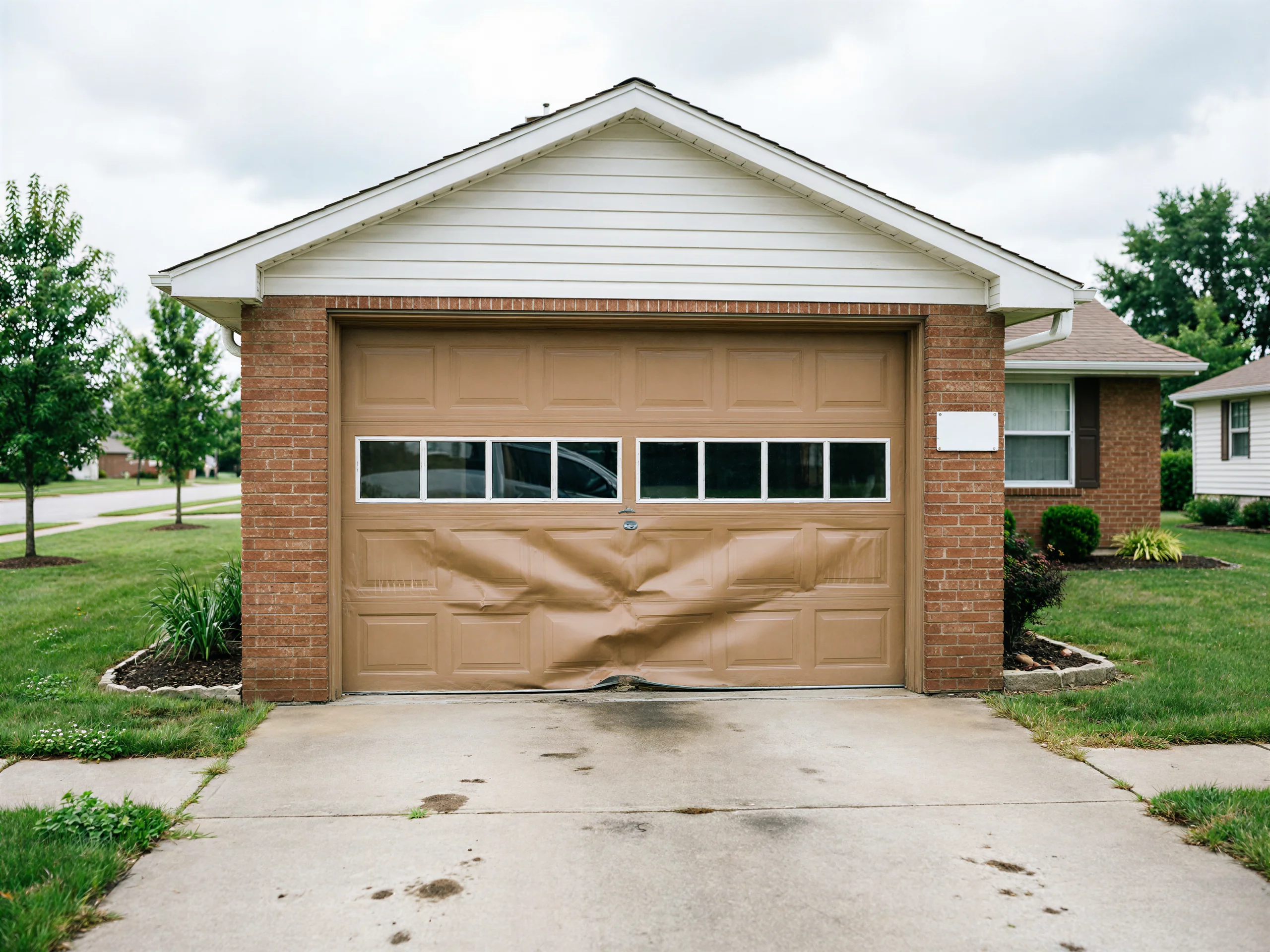
The most common version is a single dented or creased panel, usually low on the door where it takes the hit from a car bumper or a dropped tool.
Paint cracking at dents
On older doors from this build era, you'll often also see the panel's paint cracking along the dent line before the steel itself gives way - that's the cold doing its work on metal that's already fatigued.
Seam separation from hinges
A second version shows up as a panel that's intact but has pulled away from its neighbor at the seam, usually because a hinge bolt sheared or backed out over years of thermal cycling. The door still closes, but there's a visible step between sections and a whistle of air through the gap in windy weather.
Composite core rot
The third version is rot or delamination on wood-composite panels from the same era - moisture gets into the core material over a few decades of Midwest winters and the panel goes soft at the bottom corners first. That one's easy to miss until you push on the panel and your thumb goes further than it should.
Panel structure, not motor
In all three cases, the opener usually keeps running fine, which is exactly why people put off the call - the door still goes up and down. The problem is the panel's structural integrity, not the motor, and it gets worse every cold snap until the fix happens.
How We Fix It
First step is figuring out whether a single-panel swap is actually possible on your door or whether the model's old enough that matching sections aren't being made anymore.
Gauge and spacing checks
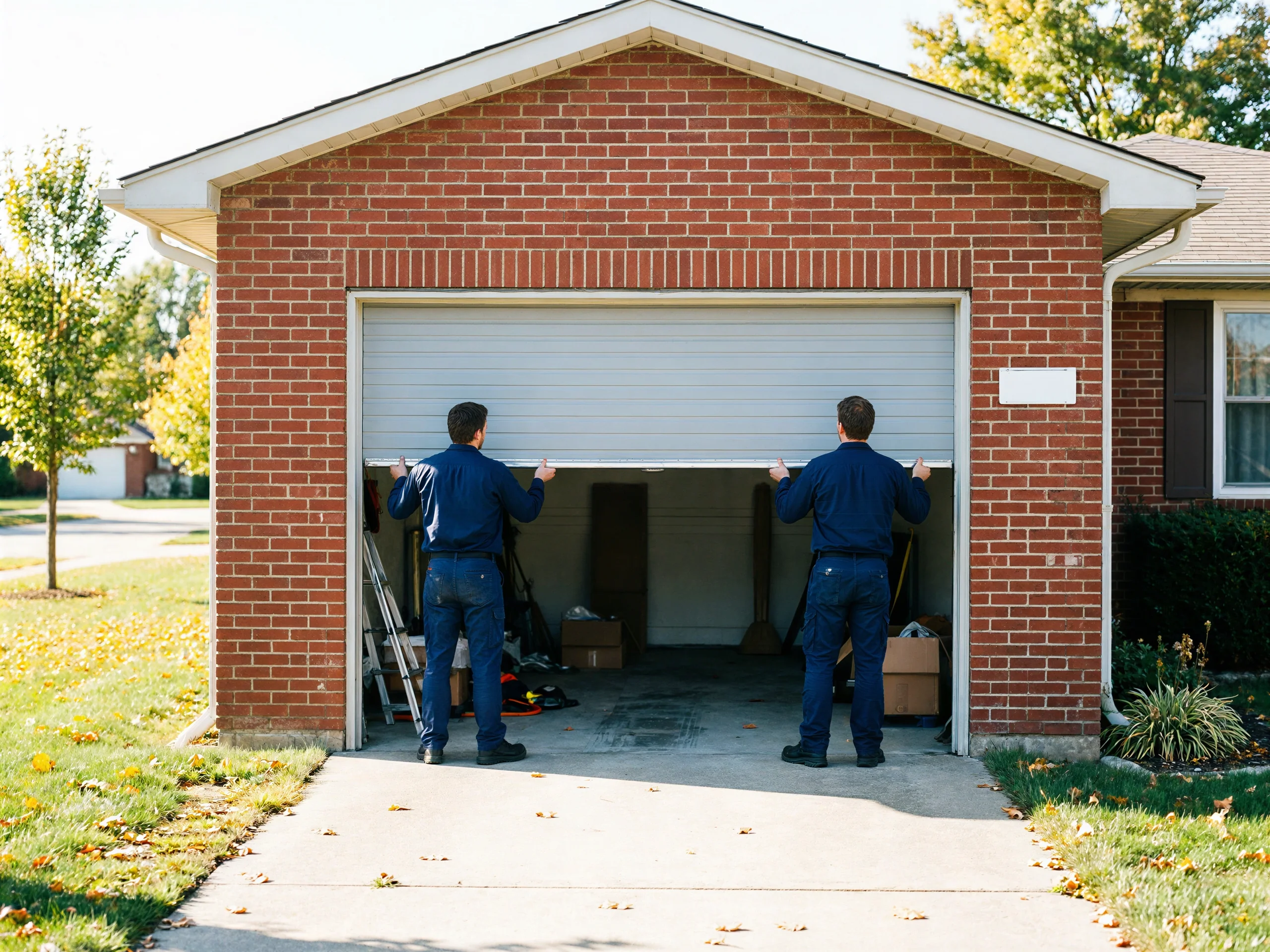
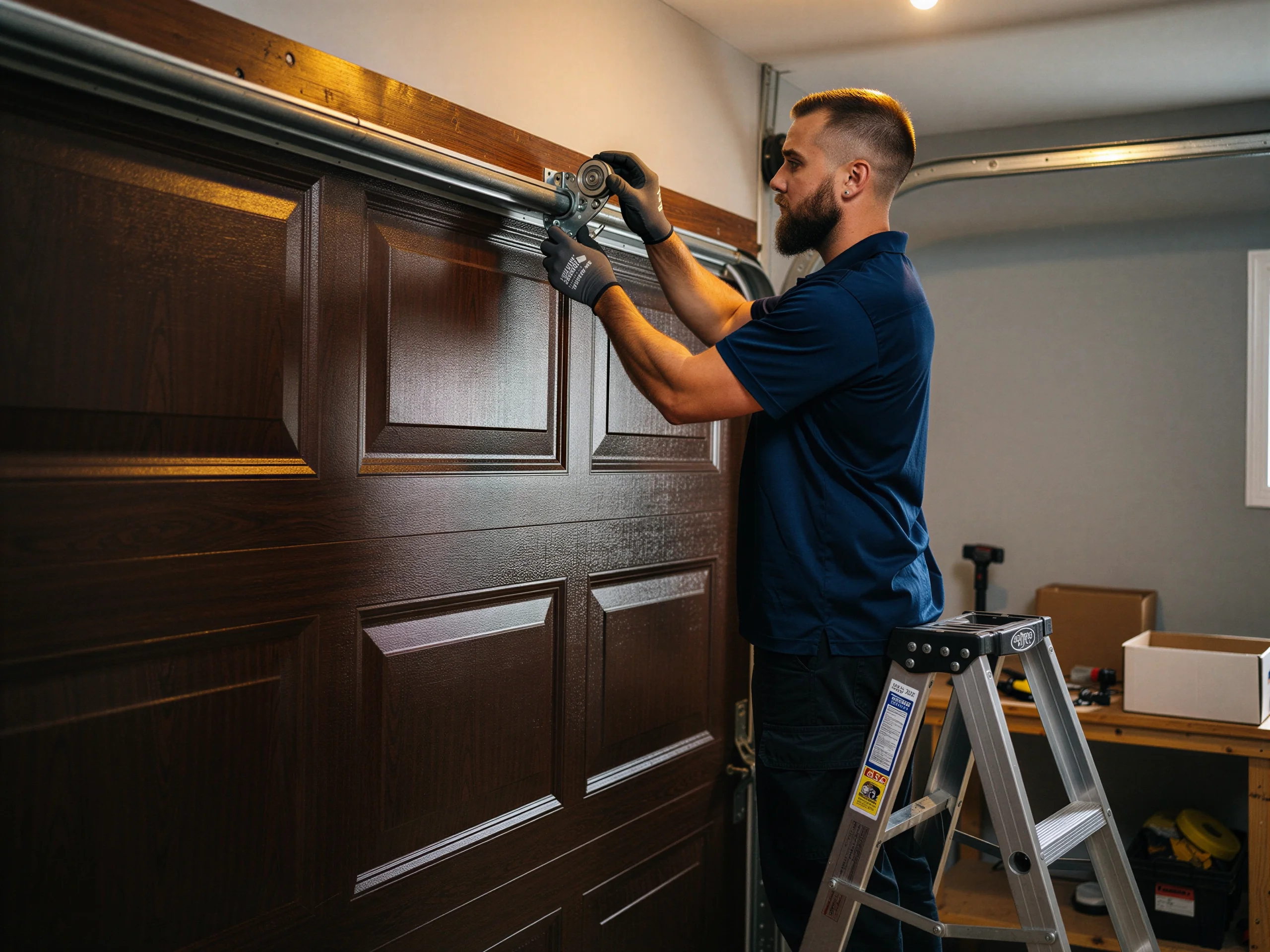
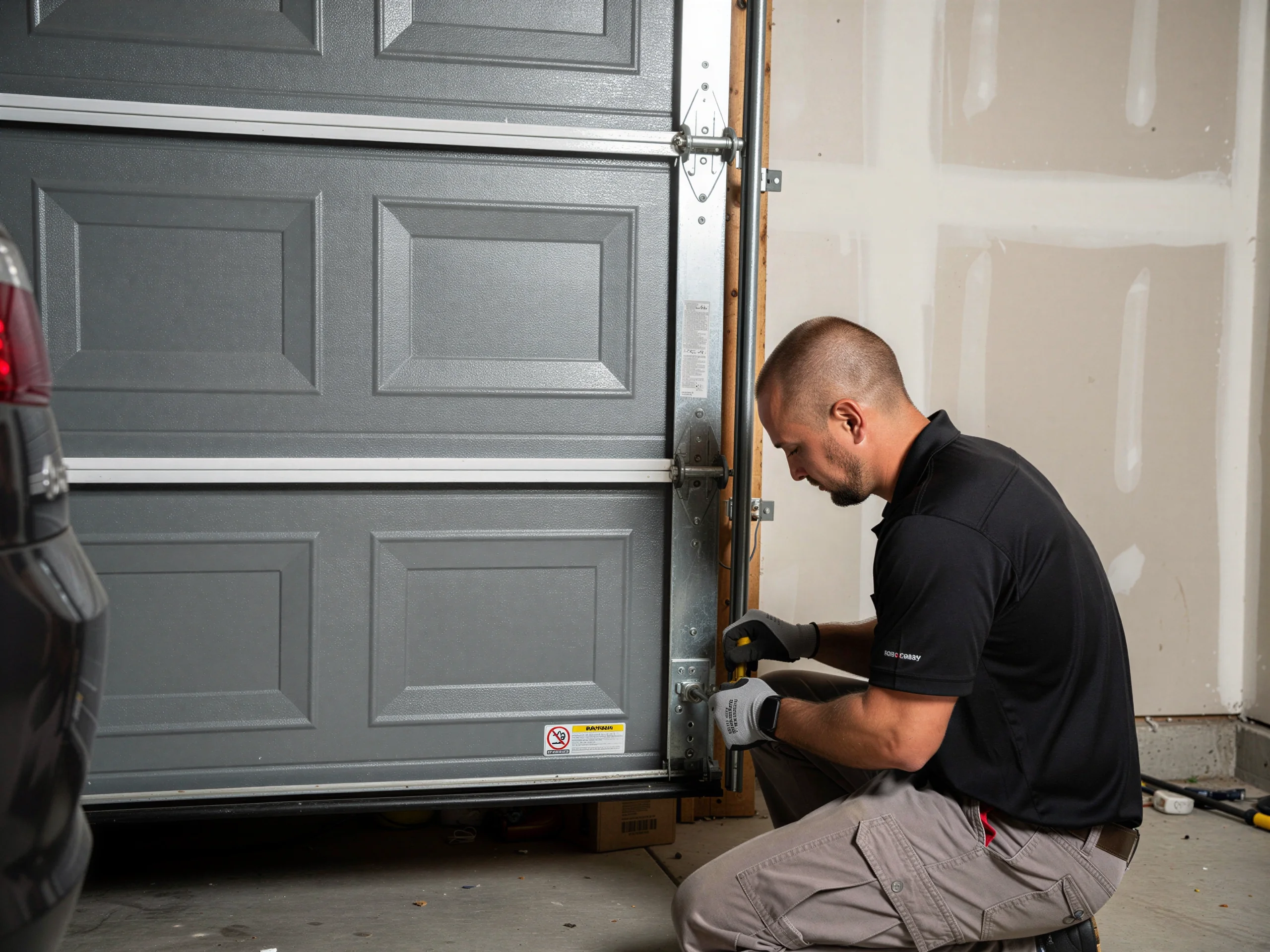
We check the panel design, the steel gauge, and whether the hinge spacing on a replacement section will line up with what's already on the door before we quote anything. If a match exists, we pull the damaged section, reset the hinges and rollers, and make sure the new panel sits flush with the rest of the door before we re-tension anything spring-side.
Full-door economics
If the door's old enough or the damage has spread to the track or an adjacent section, we'll tell you straight that full-door replacement is the better money - patching a door that's already failing in two places just means another call in a year.
Special-order panel profiles
One limitation worth saying plainly: we don't stock every discontinued panel profile on the truck, and some older doors need a special order that takes longer than a same-week fix. If that's your situation we'll tell you up front rather than quote a timeline we can't hit. We'd rather lose a day on the schedule than show up with the wrong panel twice.
Talk to a local pro
Garage door service in Elk Grove Village?
Same-day service with honest, upfront quotes.