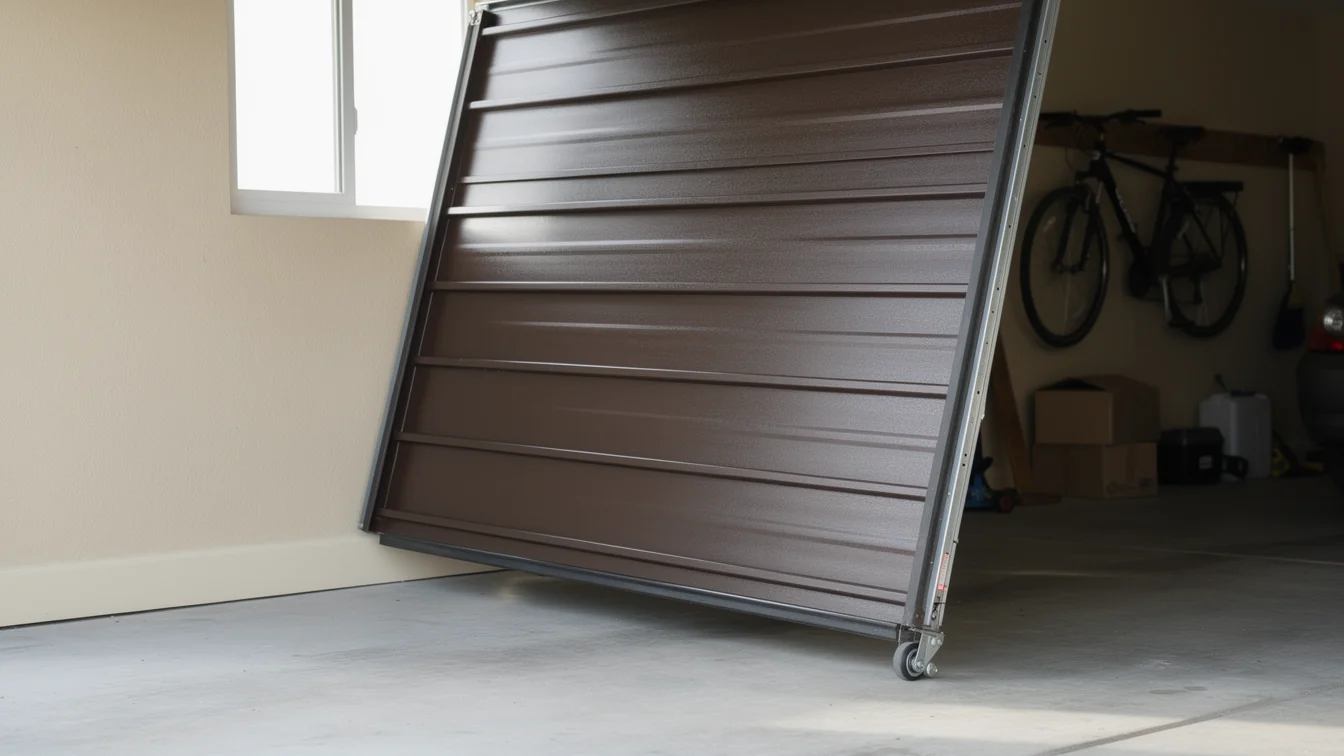
Why a Garage Door Goes Off Track
Elk Grove Village homes built between 1938 and 2001 carry original track hardware that cold winters and decades of use push out of alignment.
Read moreElk Grove Village homes built 1938-2001 often carry wide double doors that flex in wind. Here's what to check and when a panel or track issue means more than cosmetic damage.
Local detail
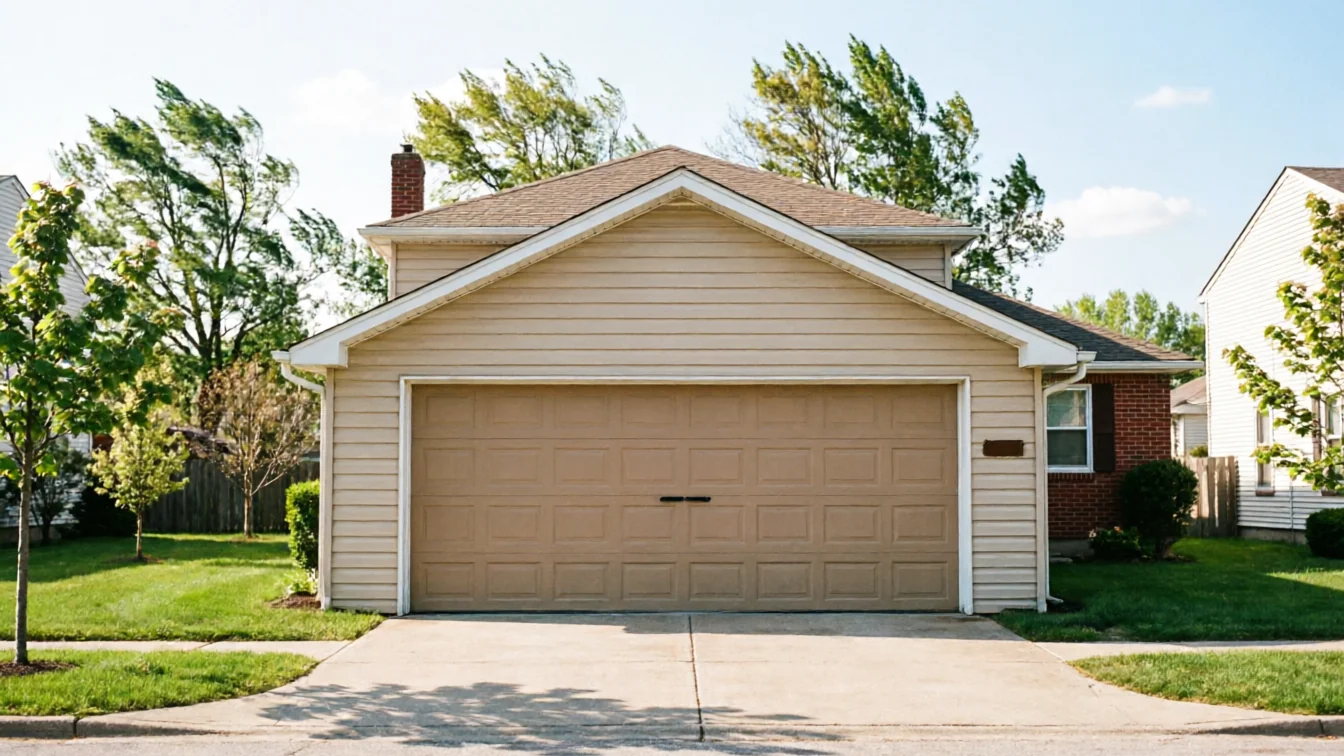
Walk up to a closed double-wide door on a windy day and watch the top section. If you see it bow inward and snap back when a gust hits, that's not normal flex - that's a panel without enough resistance to the load. Run your hand along the bottom third of each vertical track while the door is down. Any give, any wobble where the track bracket meets the framing, means the fasteners have worked loose from repeated pressure cycles. Open the door halfway and look at the rollers in the horizontal curve of track. On a lot of homes here, dating back to the 1960s and 70s construction common across this area, that track is the original gauge steel, and it was never sized for a door this wide. Check the center stile too if the door has one - it's a thin vertical seam down the middle of the panel, and it's often the first thing to crack or separate at the hinge when wind load concentrates there instead of spreading across the full span.
The area
A lot of the housing stock in Elk Grove Village went up between 1938 and 2001, with the bulk clustered in the 1960s and 70s, and that era favored wide two-car garage openings on a single door rather than two single bays. A wide door has more surface area for wind to push against, and the doors built for that era weren't engineered the way a modern wide door is - no internal reinforcement struts running the full width, thinner steel, and hinges spaced for a narrower load path. That combination means the door itself becomes the weak point in a wind event, not the opener and not the track. It's a structural question more than a mechanical one: the panel has to resist a sideways push, and a lot of these original doors were never asked to do that job at the width they're installed at.
What we find
Elk Grove Village sits in a cold, moderate climate band, which means the door isn't just dealing with occasional wind - it's cycling through freeze and thaw, and steel contracts in the cold exactly when wind pressure tends to pick up. A panel that already has a slight bow from age flexes harder when the steel is stiff with cold, and that's when a stress crack along the center stile turns into a split. Weatherstripping on these older doors also shrinks in the cold, which lets more wind pressure load directly onto the panel face instead of sealing it out at the edges. None of this is dramatic on any single day. It's cumulative - a few dozen cold, windy days a year, repeated over decades on the original door, and the fatigue shows up as a bent top section or a track pulled loose from the jamb, usually discovered on the one night you actually need the door to open.
How we work
Not every bow in a wide door is an emergency. If the panel flexes an inch or two in a strong gust and returns flat when the wind drops, that's within normal tolerance for a lot of the doors built in this era, and you don't need to replace it on that basis alone. Where I draw the line is permanent set - if the panel stays bowed after the wind stops, or the center stile has a visible gap at the seam, that's not going back to true on its own and it will keep getting worse through another cold season. I'll be honest that reinforcing an original wide door from this era isn't always worth doing. Past a certain point the labor to retrofit struts and new hinges costs close to what a new wind-rated wide door runs, and the old panel still won't match current standards. Sometimes the right call is to stop patching it.
Questions
On a lot of the wide double doors built in Elk Grove Village during the 1960s and 70s, there's no full-width reinforcement strut behind the panel. Wind pressure pushes against the flat steel and the middle, which is the least supported section, flexes the most. A little give that snaps back is normal for these older doors. A bow that stays is not.
Yes. Elk Grove Village sits in a cold, moderate climate band, and steel panels stiffen in cold temperatures. A stiff panel under wind load cracks instead of flexing, especially at the center stile seam on older doors. Cold also shrinks weatherstripping, which lets more wind pressure hit the panel face directly instead of being deflected at the edges.
Sometimes, but not always. Retrofitting struts and heavier hinges onto an original door from the 1960s-70s building stock can cost close to what a new wind-rated wide door runs, and the old panel still won't meet current standards afterward. If the door already has permanent bowing, replacement is usually the better use of the money.
Recommendation
More garage door guides for Elk Grove Village homeowners.
Elk Grove Village homes built between 1938 and 2001 carry original track hardware that cold winters and decades of use push out of alignment.
Read more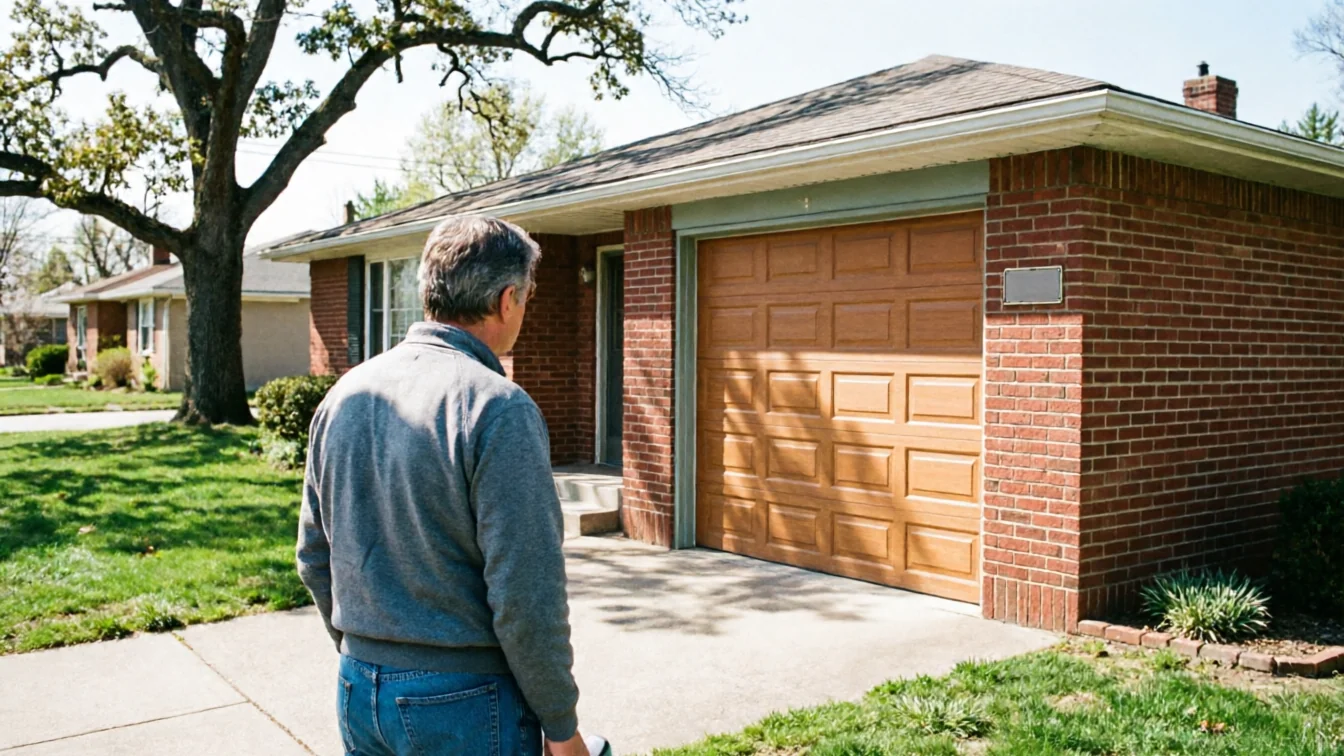
Most Elk Grove Village homes were built between 1938 and 1976, with openings sized for that era.
Read more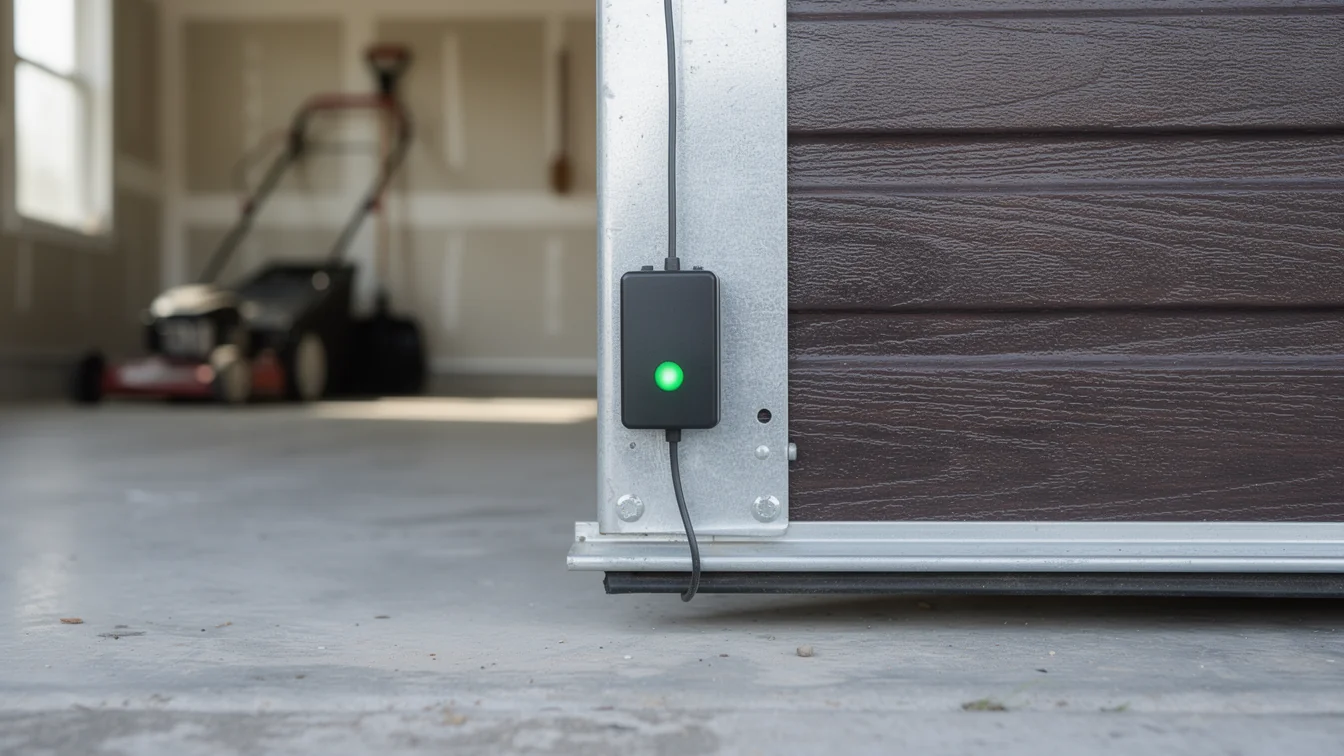
Elk Grove Village garages mostly date from the 1960s-70s boom, and cold winters shift slab and track alignment enough to throw sensor eyes off.
Read moreReady when you are
Elk Grove Village Garage Door Pros repairs and installs garage doors, springs and openers in Elk Grove Village, IL and the surrounding area.