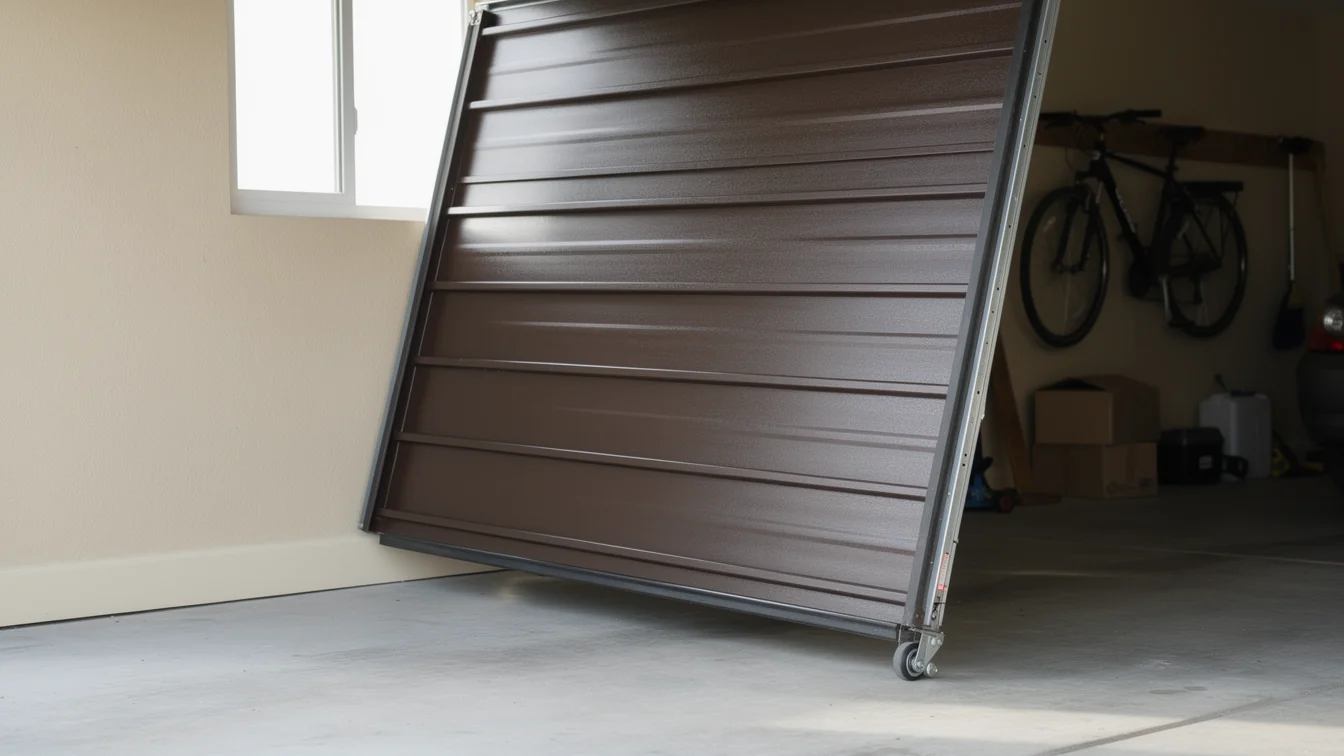
Why a Garage Door Goes Off Track
Elk Grove Village homes built between 1938 and 2001 carry original track hardware that cold winters and decades of use push out of alignment.
Read moreMost Elk Grove Village homes were built between 1938 and 1976, with openings sized for that era. Here's what replacing an old door involves in this area.
Local detail
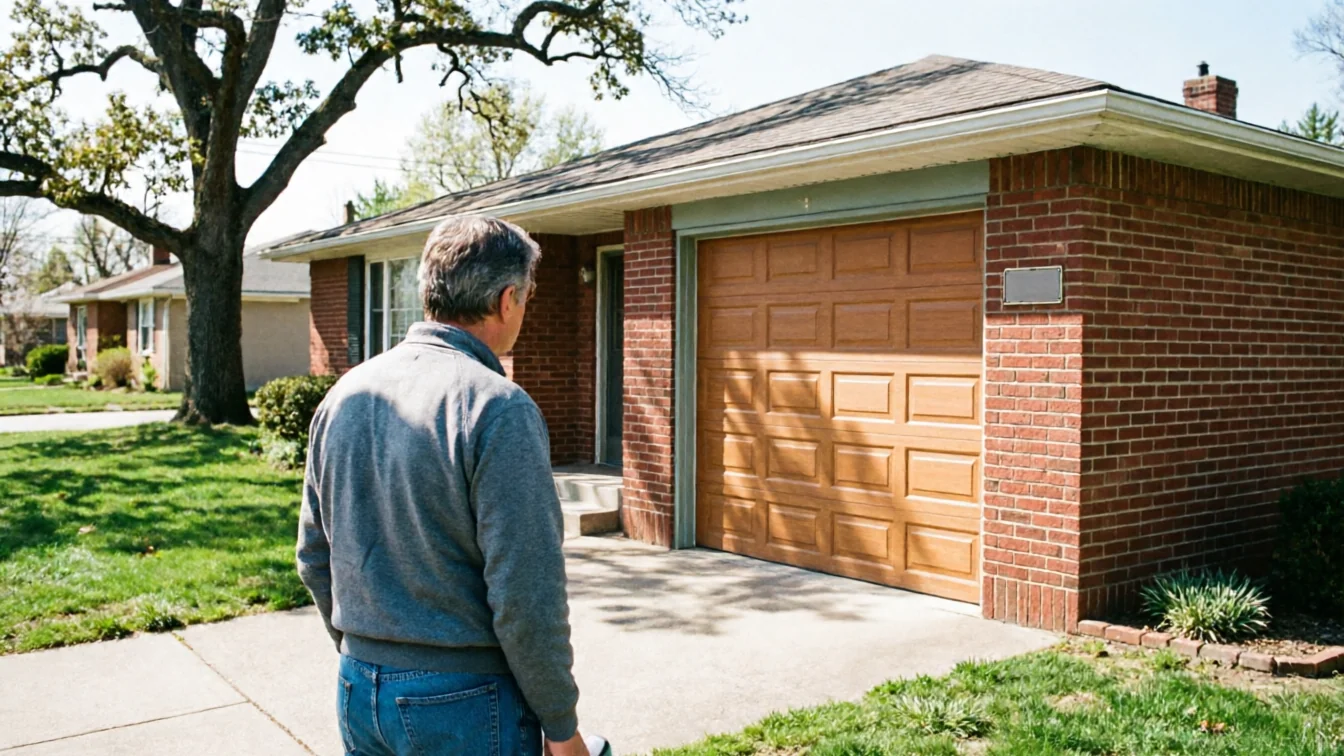
If your house in Elk Grove Village went up in the big building wave between the late 1950s and 1970s, which covers most of the housing stock here, check the track width before you call anyone. Many of those original openings run narrower than what current steel door lines are cut to, so a straight swap can mean adjusting the jamb or ordering a custom width. Look at the bottom panel first: rust bubbling along the weld seam often shows up on doors from that era because the galvanized coating wasn't as thick as what's used now. Push on the panel between the rollers - if it flexes more than a half inch, the steel has thinned enough that patching won't hold through another winter. Also check the spring: on doors this old it is almost always a single torsion spring rated for a wood door, even if someone swapped in a lighter steel door later. That mismatch wears the spring faster than the rating suggests. If the opener predates the door, that's another tell - a lot of garages here got openers added well after the house was built, and the brackets were never upgraded to match a heavier replacement door.
The area
Elk Grove Village sits inside a service area of roughly 430,000 households, about 211,900 of them owner-occupied houses rather than rentals or condos. Median household income across that area runs about $105,000, which is part of why replacement requests here skew toward mid-to-upper steel and insulated doors rather than the cheapest single-layer option - owners want something that'll last through another Illinois winter, not just pass inspection. The town itself sits close to Itasca, about two miles off, and Wood Dale a few miles further, both with similar housing ages, so the same sizing and hardware issues show up across that stretch. What that means for you: if your neighbor two streets over just replaced a door, their opening was probably built to the same spec as yours, and the quote they got is a reasonable ballpark - but only if the house went up in the same decade. Houses closer to 1938 on the older end of that range often have different jamb depths than the ones built in the 1970s, so don't assume identical pricing block to block.
What we find
This area sits in a cold, moderate climate band - real winters, real temperature swings, not the kind of cold that cracks foundations but enough to work on steel and rubber year after year. The bottom seal is the first thing to go: it hardens in low temperatures and loses its grip on the slab, letting wind and road salt spray in under the door. On uninsulated doors from the 1960s and 70s stock common here, the steel skin contracts enough in deep cold that panel seams that were tight in August start rattling by January. If your garage shares a wall with living space, that gap matters more than people think, since the cold pulls straight through a single steel skin. Insulated doors with a polystyrene or polyurethane core handle that swing better, which is part of why they're now the more common replacement choice in this area rather than just a cost-saving upgrade. Hardware takes a hit too: springs cycle tighter in cold weather, and a spring that was already near the end of its life from age often lets go on the first hard cold snap of the season, not in July.
How we work
Here's the honest part: not every door on this list needs replacing yet, and we won't tell you otherwise. A door from the 1970s with a sound frame, no rust through the panel, and a spring that still holds tension can often run another five or ten years with nothing more than a new seal and a lubed track. Where it stops making sense is once the panel is flexing, the track is bent at a roller, or you're replacing the same spring twice in three years - at that point you're paying repair money toward a door that was never going to fit right anyway. One thing we don't do is force a modern standard-width door into a narrower original opening without reframing the jamb; it looks fine for a season and then binds. If your house falls on the older end of the 1938-to-2001 build range and the opening is non-standard, expect that reframing work to be part of any honest replacement quote, not an upsell tacked on later. Buying a replacement door here means matching it to what your garage was actually built for, not just the size on a shelf.
Questions
Housing in this area was mostly built between 1938 and 2001, with a median year around 1976, so a lot of original doors and openings date to that mid-century stretch. That means sizing and hardware often don't match what's sold off the shelf today without some adjustment.
Yes. This area sits in a cold, moderate climate band, and uninsulated steel doors from older housing stock here tend to seal poorly and rattle once temperatures drop. An insulated core handles the seasonal swing better and is the more common choice for replacements in this area now.
If the frame is sound, there's no rust through the panel, and the spring still holds tension, a repair can carry you another several years. Once the panel flexes, a track is bent, or you're replacing the same spring repeatedly, you're usually paying into a door that won't fit right anyway.
Recommendation
More garage door guides for Elk Grove Village homeowners.
Elk Grove Village homes built between 1938 and 2001 carry original track hardware that cold winters and decades of use push out of alignment.
Read more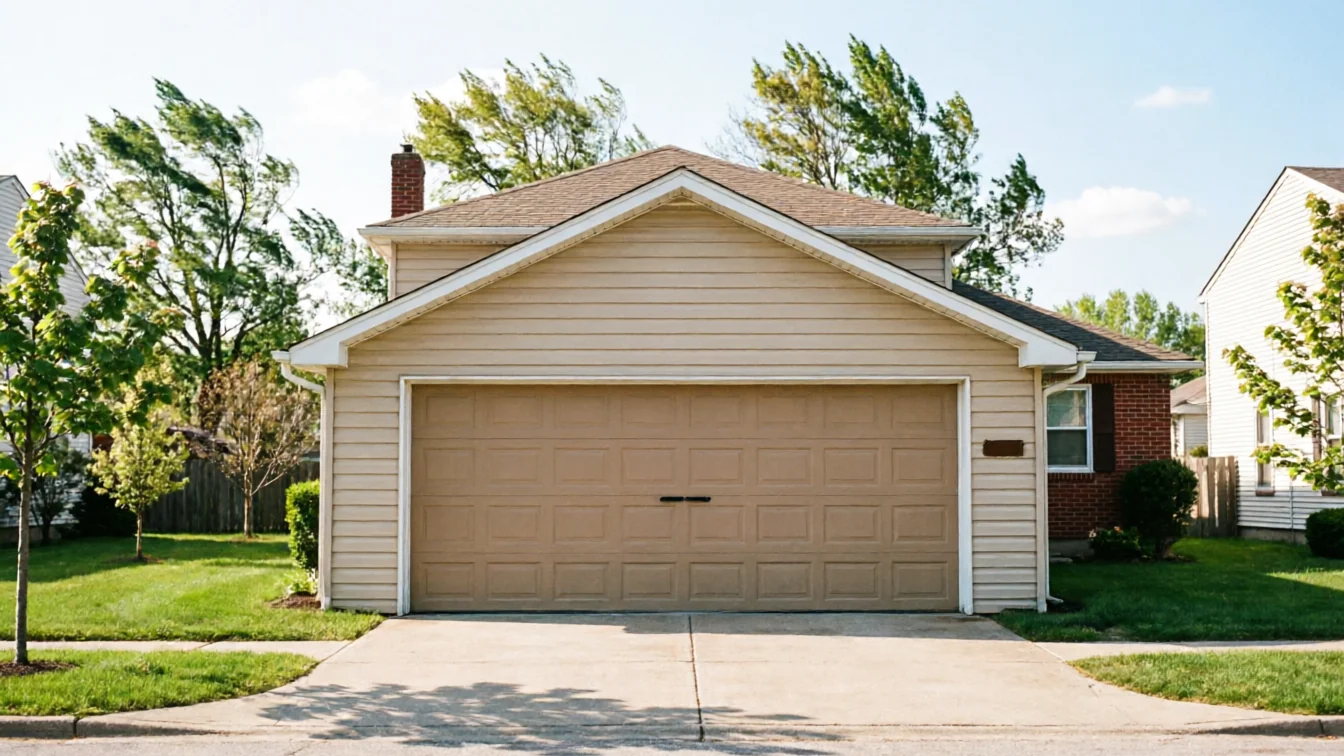
Elk Grove Village homes built 1938-2001 often carry wide double doors that flex in wind.
Read more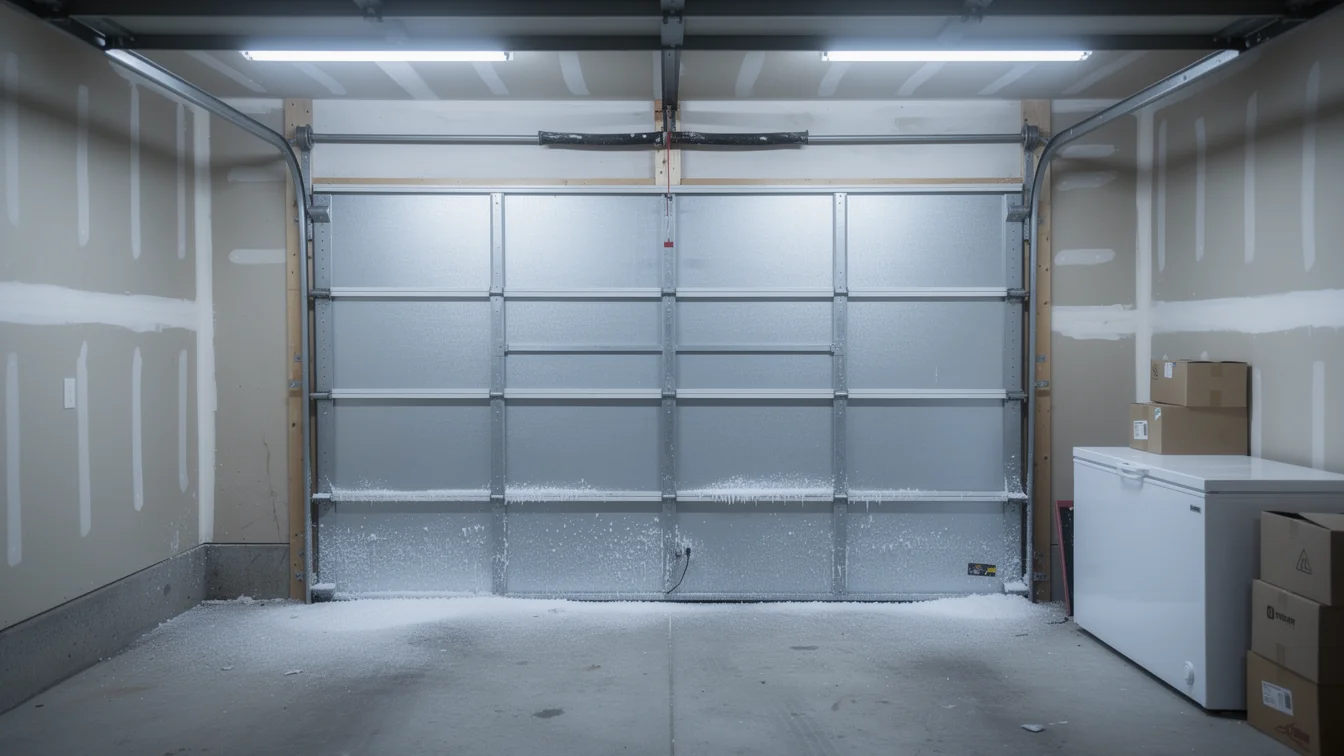
Most Elk Grove Village garage doors date to the 1960s-70s building boom.
Read moreReady when you are
Elk Grove Village Garage Door Pros repairs and installs garage doors, springs and openers in Elk Grove Village, IL and the surrounding area.