Doing It Yourself
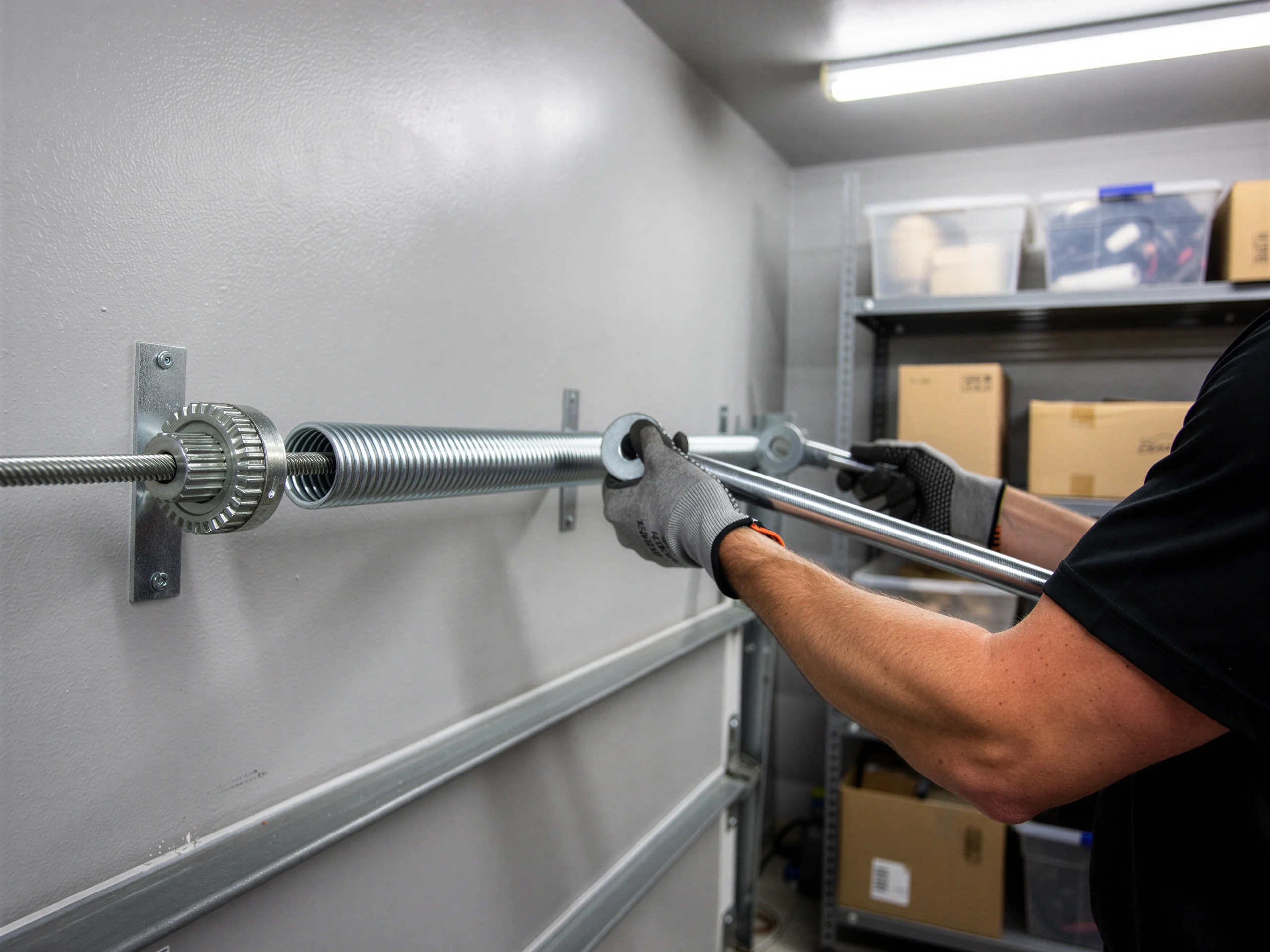
A torsion spring is wound under enough tension to put a person in the hospital, which is the main reason we don't write a step-by-step for replacing one yourself.
Video-tutorial false ease
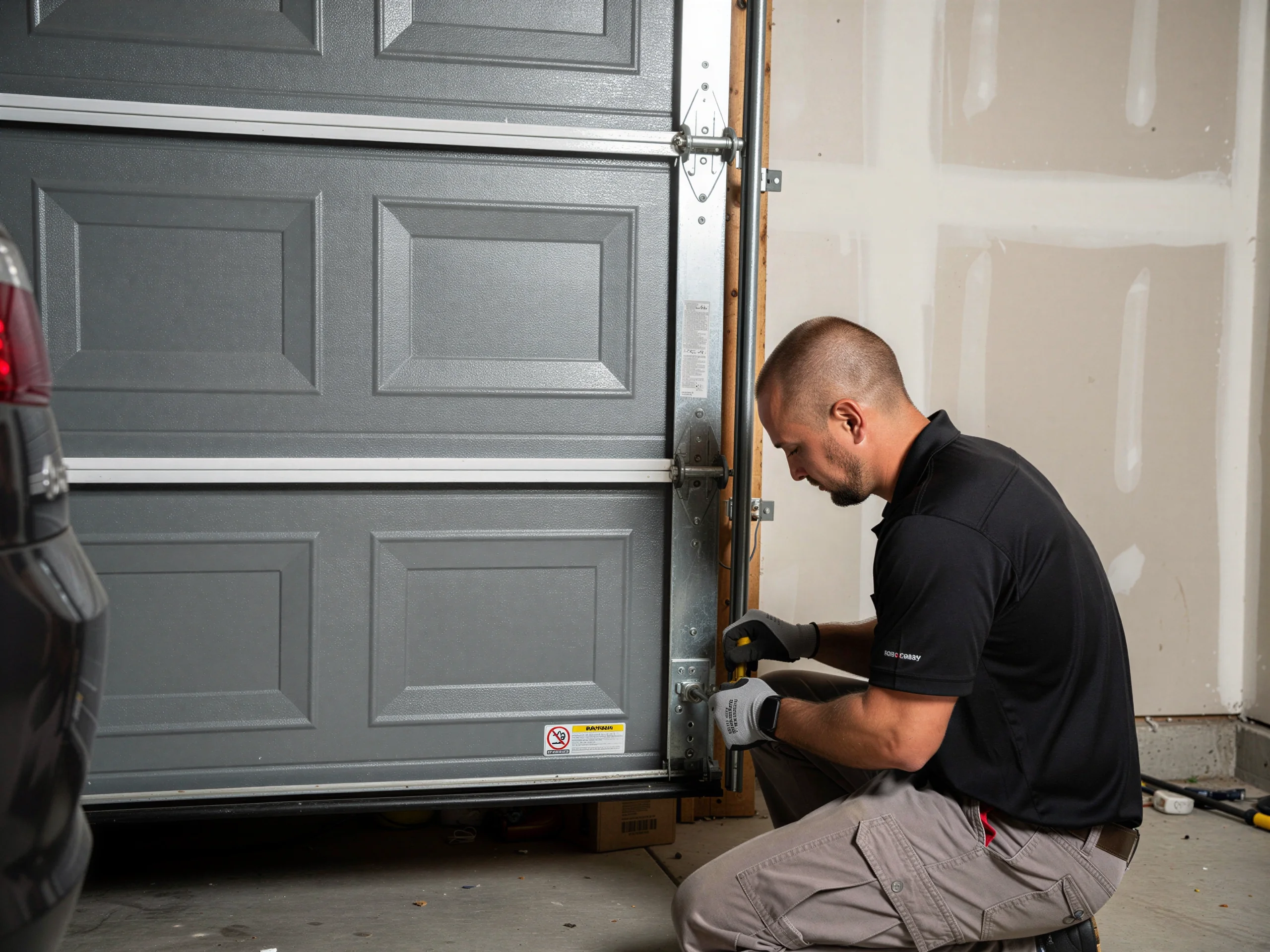
YouTube makes it look like a wrench and ten minutes. It isn't. The spring sits on a shaft above the door, held by set screws on a cone that can let go without warning if the winding bars slip, and the cable drums on either side have to stay in sync or the door comes off track the first time it closes. What you can safely do is diagnose.
Visible coil gap
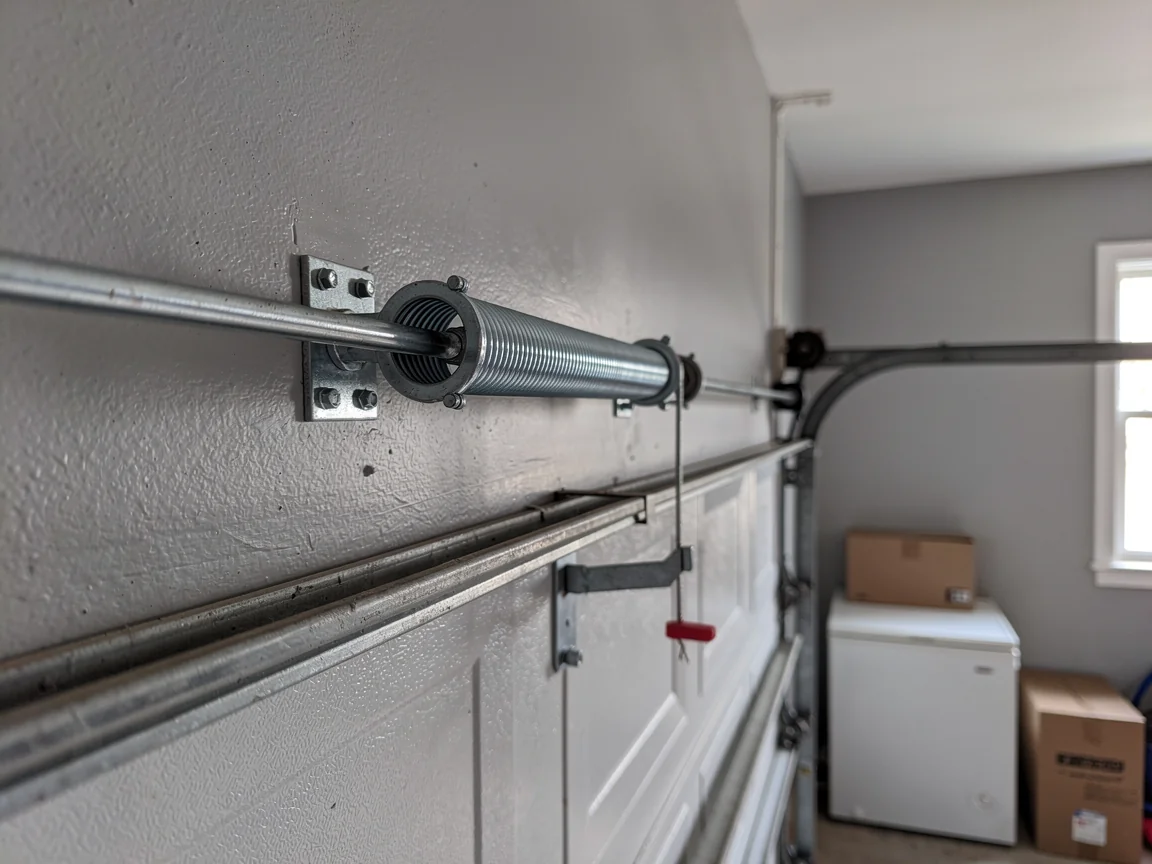
If the door feels heavy when you lift it by hand with the opener disconnected, or if you see a visible gap in the coil of the spring above the door, that's a broken or weakening torsion spring, not a motor problem. Extension springs - the ones stretched along the horizontal tracks on older setups - are a little more forgiving to inspect but still not something to wind or cut under load.
No phone walkthroughs
Our honest limitation here: we don't walk homeowners through spring replacement over the phone, and we won't sell you a spring kit to do it solo. That's not a sales line, it's a liability one. Once you know it's the spring, the job is a call, not a project.
Why This Fails Locally
Housing in this part of the suburbs runs from 1938 to 2001, with the typical build year landing around 1976, and most of the stock across the ninety or so named areas nearby is from the 1960s and 70s specifically. That matters for springs because a huge share of these doors are still running original torsion hardware, or a replacement spring sized decades ago for a door that's since been swapped for a heavier insulated model. Cycle count on a spring from that era has usually been used up long before anyone notices.
The climate band here is cold-moderate, which means steel springs go through real freeze-thaw stress every winter - the coil contracts in cold air, expands again on a 40-degree day, and that repeated flex is what finally snaps a spring that was already near the end of its rated cycles. A spring that might coast another two years in a warmer climate doesn't get that grace period here.
Put the housing age and the climate together and you get a predictable pattern: homes built in that postwar wave, running original or near-original torsion springs, in a climate that accelerates metal fatigue. That's the combination, not bad luck.
How It Shows Up
The most common call is a door that won't budge, with the opener straining or reversing itself halfway up - that's the opener trying to lift a door it was never built to lift without spring assistance.
Doubled lifting effort
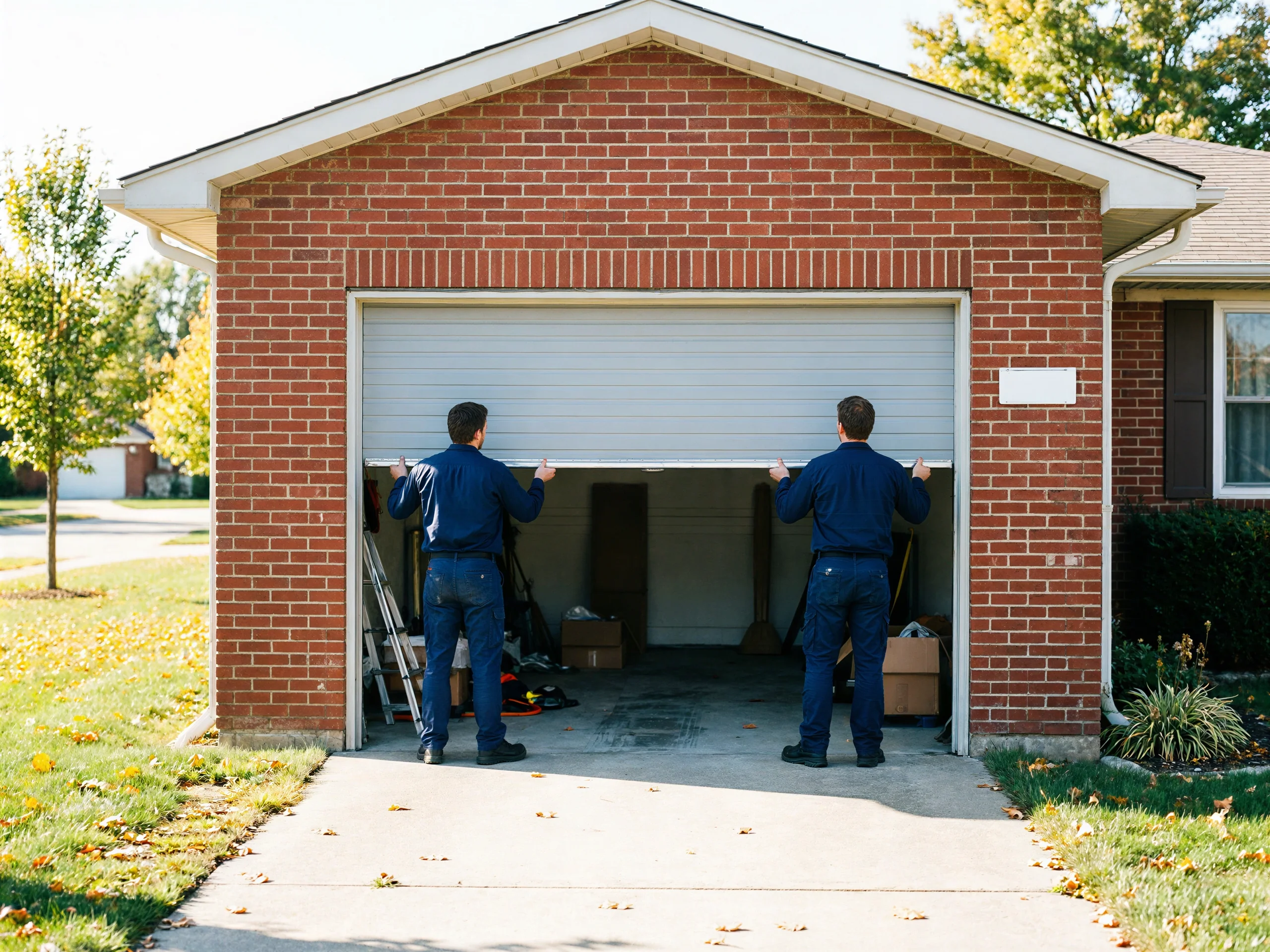
Sometimes it's quieter than that: a loud bang from the garage, usually in the morning when the metal is coldest, followed by a door that opens but feels twice as heavy as it did the day before. On double doors with a single torsion spring, failure often means the door comes up crooked, dragging on one side before you can get it level - the cable on the side without tension slackens and can jump the drum.
Slack extension spring
On older extension-spring setups you'll sometimes see the spring itself stretched out and hanging slack along the track instead of coiled tight. A door that reverses on its own, refuses to stay open, or drops suddenly partway down is not a track problem or a sensor problem first - check the spring before anything else gets replaced.
Opener gear overload
Ignoring it doesn't just mean an inconvenience; a door running on a dead spring puts full load on the opener's gears and drive mechanism, which is the next thing to fail if the spring isn't dealt with first.
How We Fix It
We size the replacement spring to the actual door - weight, height, and cycle life - rather than swapping in whatever matches what's currently on the shaft, since that original spring may have been undersized for the door for years.
Second-spring inspection
On torsion setups we check both springs even if only one has broken, because they wear at close to the same rate and a second failure within weeks is a common callback on single-spring jobs done elsewhere.
Tension-off inspection
We also check the drums, cables, and bearing plates while the tension is off the system, since a spring failure is often what finally reveals a worn cable or a bearing that's been grinding quietly for a year.
Household age and wear
Across the service area - just over 430,000 households, with roughly half owning the home they live in - spring wear tracks closely with house age rather than how a family uses the garage, which is part of why we ask the build year of the house before we quote the job. One limitation worth stating plainly: some older extension-spring kits and certain commercial-width torsion springs aren't something we keep stocked on the truck, and those can mean a short parts wait rather than a same-visit fix.
Talk to a local pro
Garage door service in Elk Grove Village?
Same-day service with honest, upfront quotes.