Why This Fails Locally
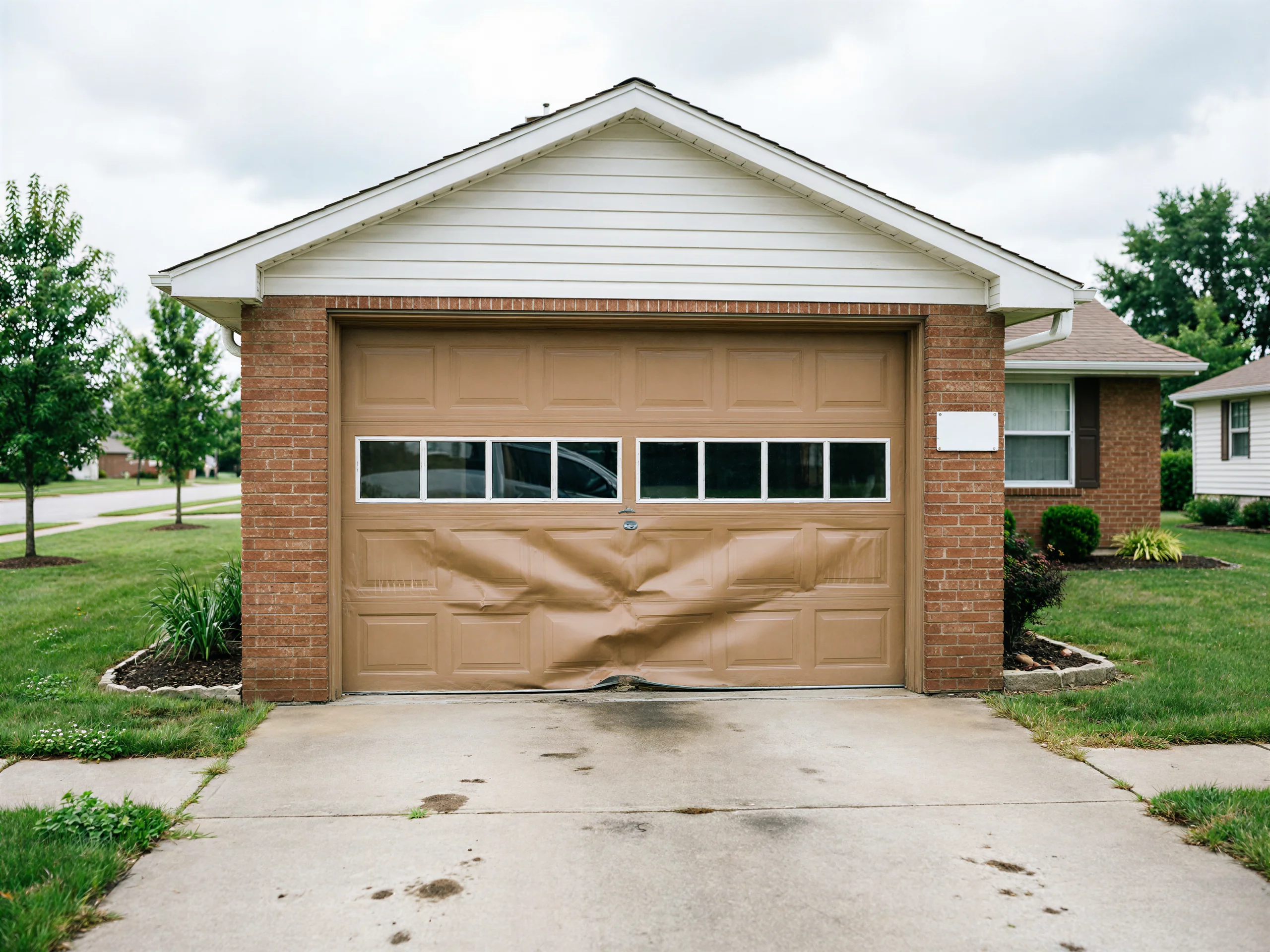
Most houses in this part of Geneva went up around 1986, a decade newer than the typical build year across the rest of the territory we run from Elk Grove Village, where the median sits closer to 1976. That decade matters. A door from the mid-80s was almost always plain steel sectional, single layer, no foam core, hung on a torsion spring sized for a light, uninsulated panel. Thirty-some years of freeze and thaw later, that same spring is carrying a door that's sagged, dented, or had a cheap insulated retrofit bolted onto hardware never built for the extra weight.
With roughly 8,199 households here, this isn't a dense grid of attached garages packed close together - it's wider lots, mostly detached garages, doors spaced apart rather than shoulder to shoulder. That changes what fails first: it's less about shared-wall noise complaints and more about a single door working alone against real temperature swings. The area sits in a cold-to-moderate climate band, so a non-insulated steel door from that era is doing nothing to stop a January cold front from turning the garage into an icebox, and the metal itself contracts and expands enough over a winter to loosen hinges and throw a track out of plumb.
How We Fix It
We start by measuring the actual rough opening, not assuming it matches a catalog size. Builders in the mid-80s didn't all use identical framing, and a door that looks standard can be an inch or two off in either direction.
Nineteen-mile trip planning
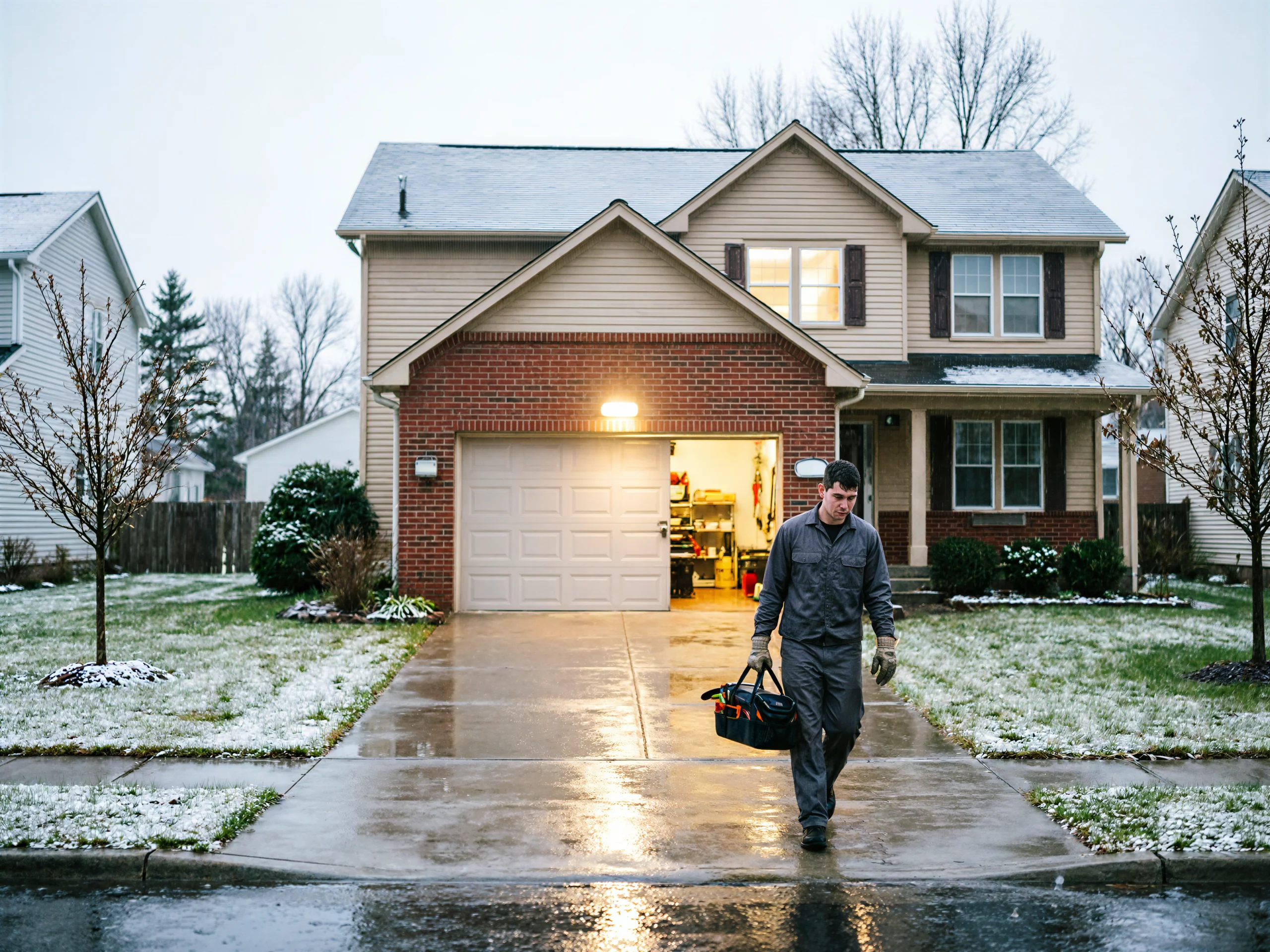
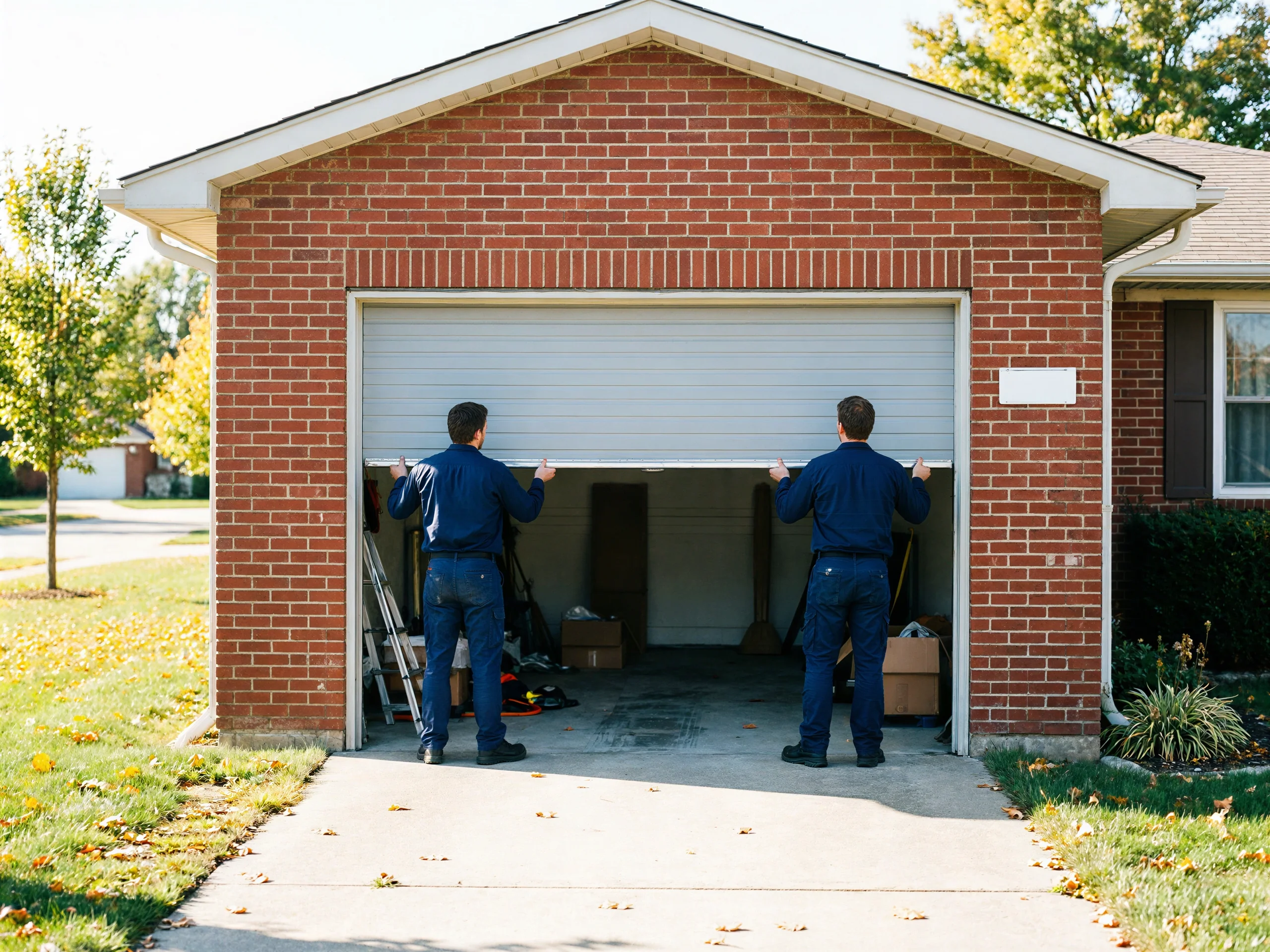
We bring the install from Elk Grove Village, 19 miles out, so the trip is scheduled into the job rather than squeezed in - that means we show up with the door, the track, and the spring already sized for what we measured on the first visit, not a second trip because something didn't fit.
Pulling old sectional doors
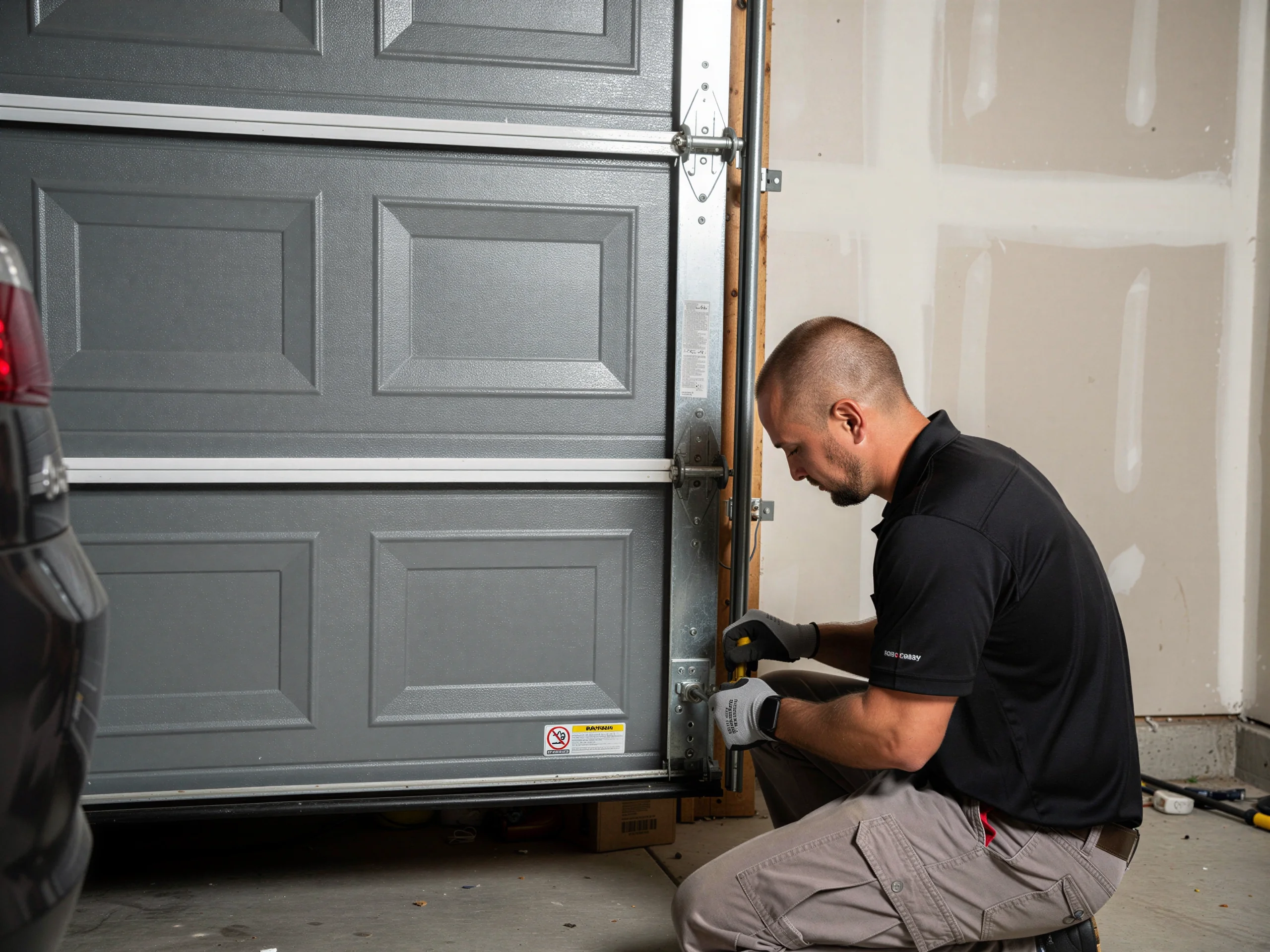
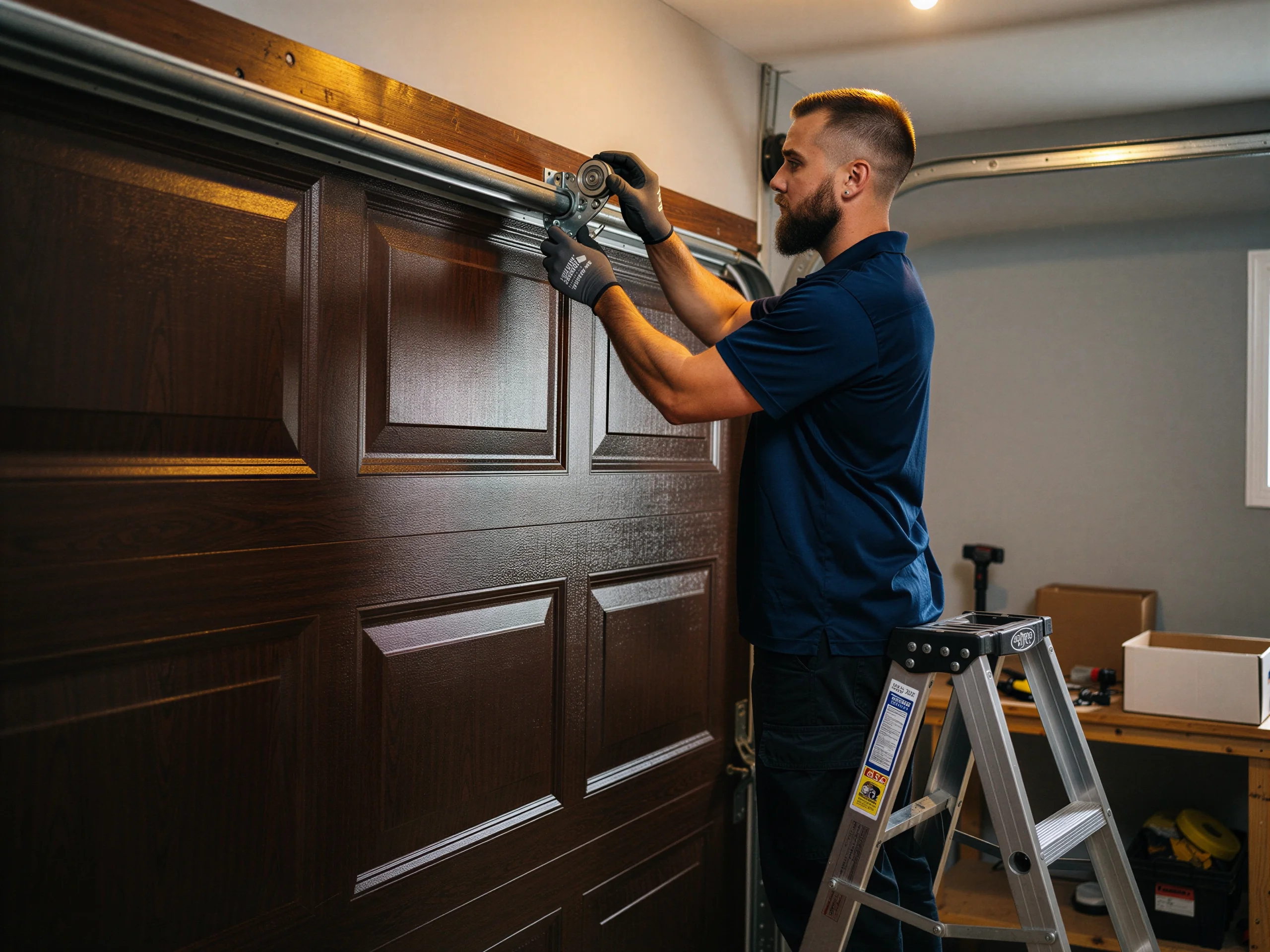
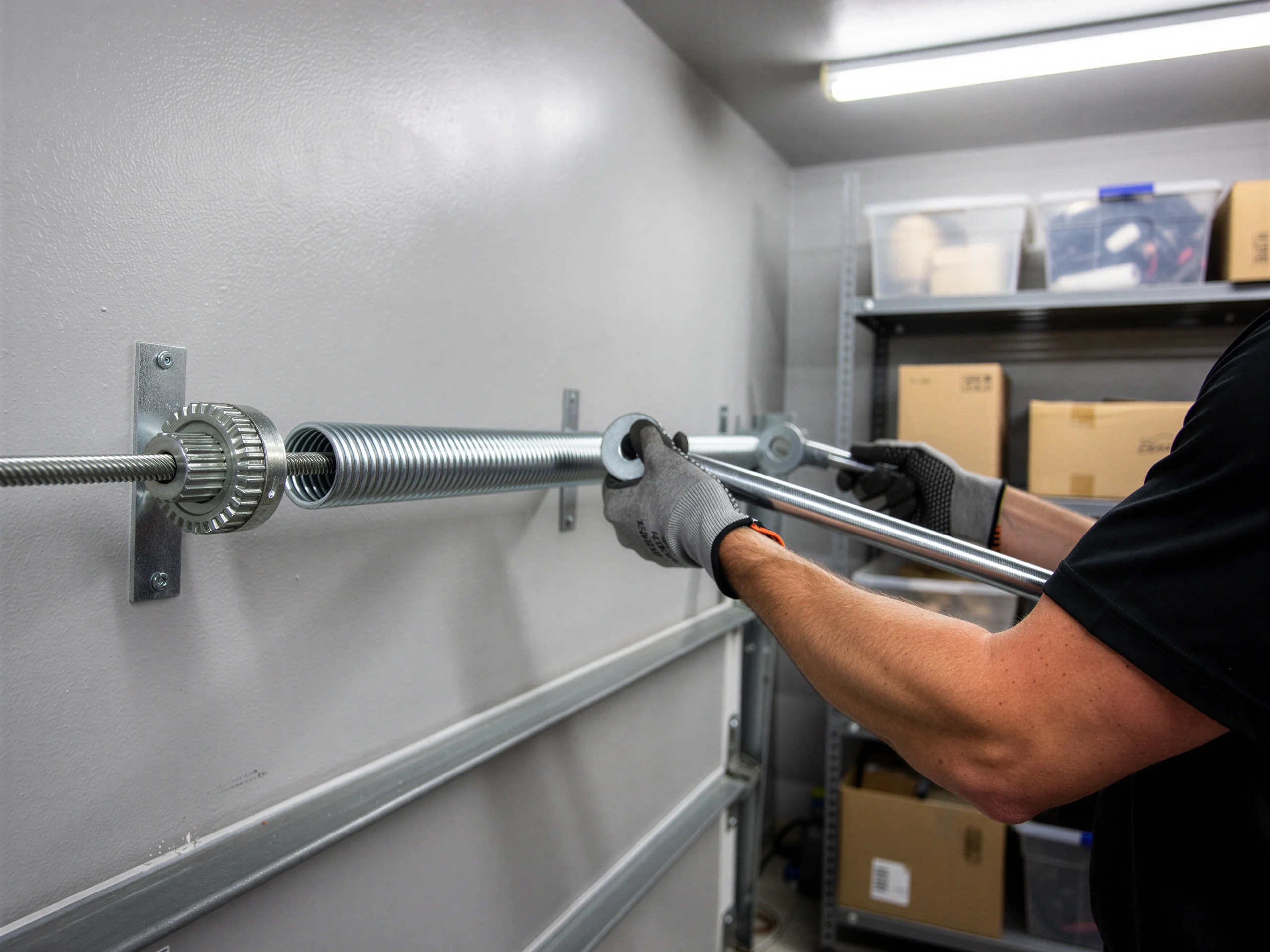
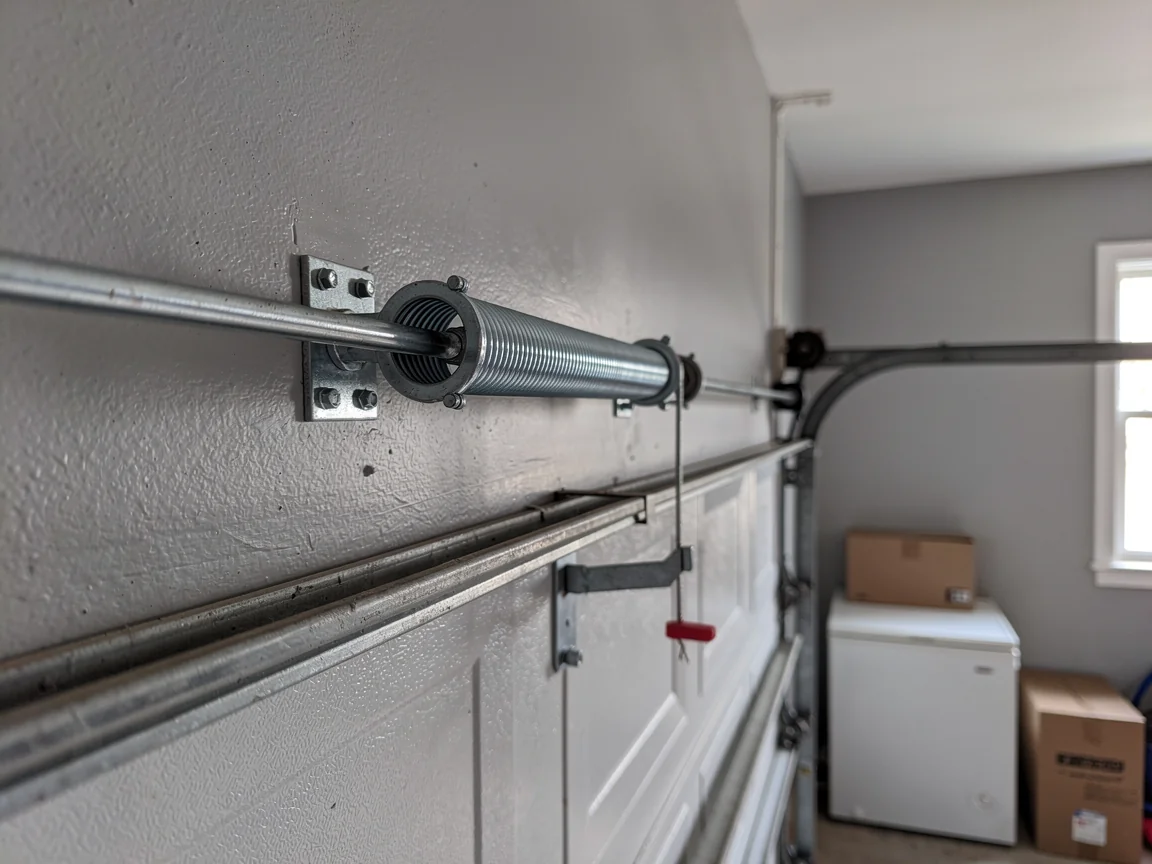
For a straight swap, that means pulling the old sectional door and its torsion spring as one job, not reusing the spring on a new door - the weight is almost never the same, insulated panels run heavier than the plain steel they're replacing.
Plumb track setting
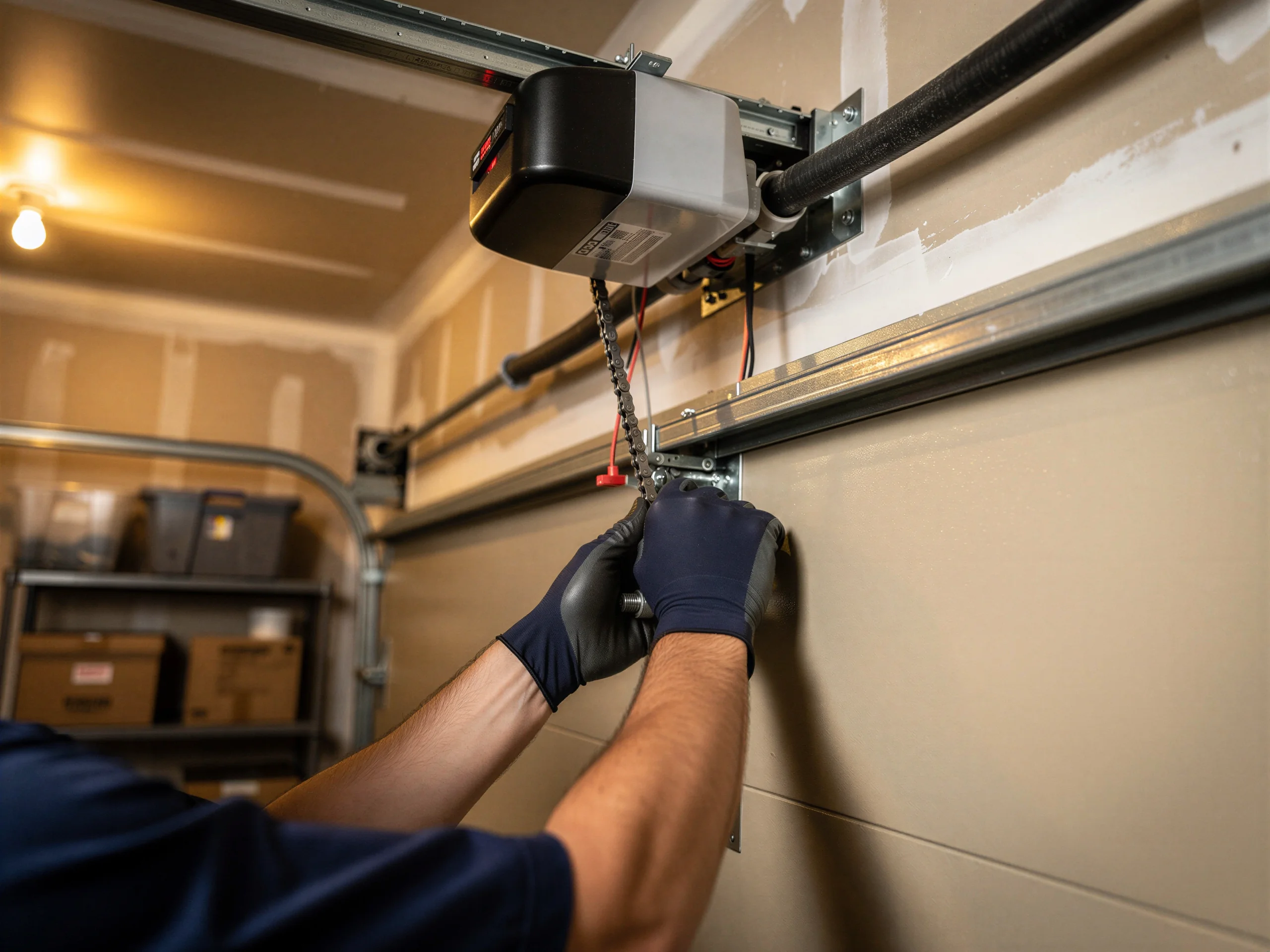
We set the new track plumb, match the spring cycle rating to the door weight, and test the opener's force settings against the new panel, since an opener tuned for a lighter door will either struggle to lift the new one or slam it down too hard on the way closed. If the existing opener is old enough that its safety reversal doesn't behave right once the new door's weight changes, we flag it before we close out the job, not after.
Where This Job Goes Sideways
Median household income here runs near $136,621, well above the roughly $105,461 we see across the broader service area, and that shows up in the job in a specific way: a fair number of these garages already got a DIY insulation kit, a retrofit keypad, or an aftermarket opener at some point in the last 30 years.
Hidden hardware surprises
None of that is a problem by itself, but it means the hardware underneath isn't always original, and what looks like a straightforward swap can turn up a spring that doesn't match the door, a track that was reset slightly off plumb during a prior repair, or wiring for an opener accessory that was never grounded properly.
Rough opening variance
The other place this goes sideways is the rough opening itself. A house built in 1986 on a custom or semi-custom lot doesn't always share the same stud spacing as a tract home from the same decade, so a door ordered to a standard width can come up short on one side.
Pre-order fit checks
We check this before we order, not after the door shows up on the truck - a return trip from Elk Grove Village over a half-inch gap is not a good use of anyone's afternoon.
Doing It Yourself
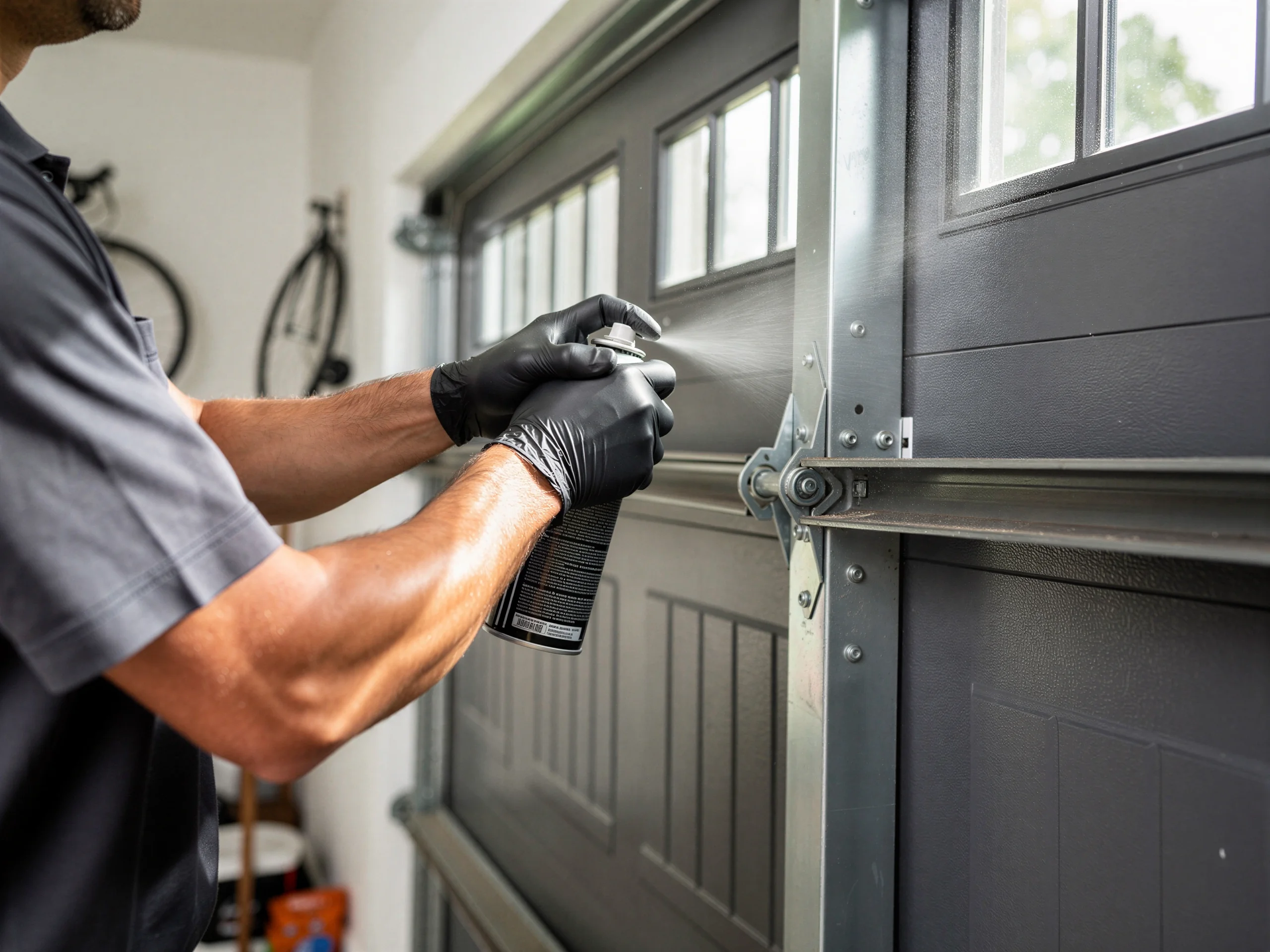
Some of this is fair to do yourself. Lubricating rollers and hinges, replacing worn weatherstripping at the bottom of the door, tightening loose bolts on the track brackets - none of that needs a truck to show up.
Factory spring caution
If your door is from the original 1986-era build and still has its factory torsion spring, though, that's not a DIY spring swap. A torsion spring under tension can break a hand or worse, and the tools to wind it safely aren't something most homeowners keep in the garage.
Weatherstrip-only fixes
Our honest limit here: if the door itself is structurally sound and the opener is working fine, replacing just the spring or just the weatherstripping is often the right call and cheaper than a full installation - we won't talk you into a new door you don't need.
Dented-through panel threshold
But if the panel is dented through, the insulation (if there ever was any) has failed, or the track has been bent and straightened more than once, a new installation is the point where it stops being worth patching.
What It Costs
We don't have a flat number to quote here, and giving one without seeing the door would be a guess dressed up as a fact.
Price drivers explained
What drives the price on a job like this is the door size, whether you want insulation added where there wasn't any before, and whether the existing track and spring can be reused or need full replacement because the new door's weight doesn't match the old hardware.
On-site measured quoting
What we can tell you is how we price it: we measure the opening and the existing hardware on site, quote the door and install together, and call out separately anything the old setup needs beyond a straight swap - a bent track, an opener too old to trust with a heavier panel, that kind of thing.
Insulated door demand
Given the income profile in this part of Geneva, we see more requests for insulated steel or composite doors than bare steel, but that's a preference, not a requirement, and a plain steel door still does the job if that's what you want.
Talk to a local pro
Garage door service in Elk Grove Village?
Same-day service with honest, upfront quotes.